inclusionAI Releases Ling-3.0-tiny, an MIT-Licensed MoE
The new hybrid mixture-of-experts model targets efficient text generation under a permissive license.
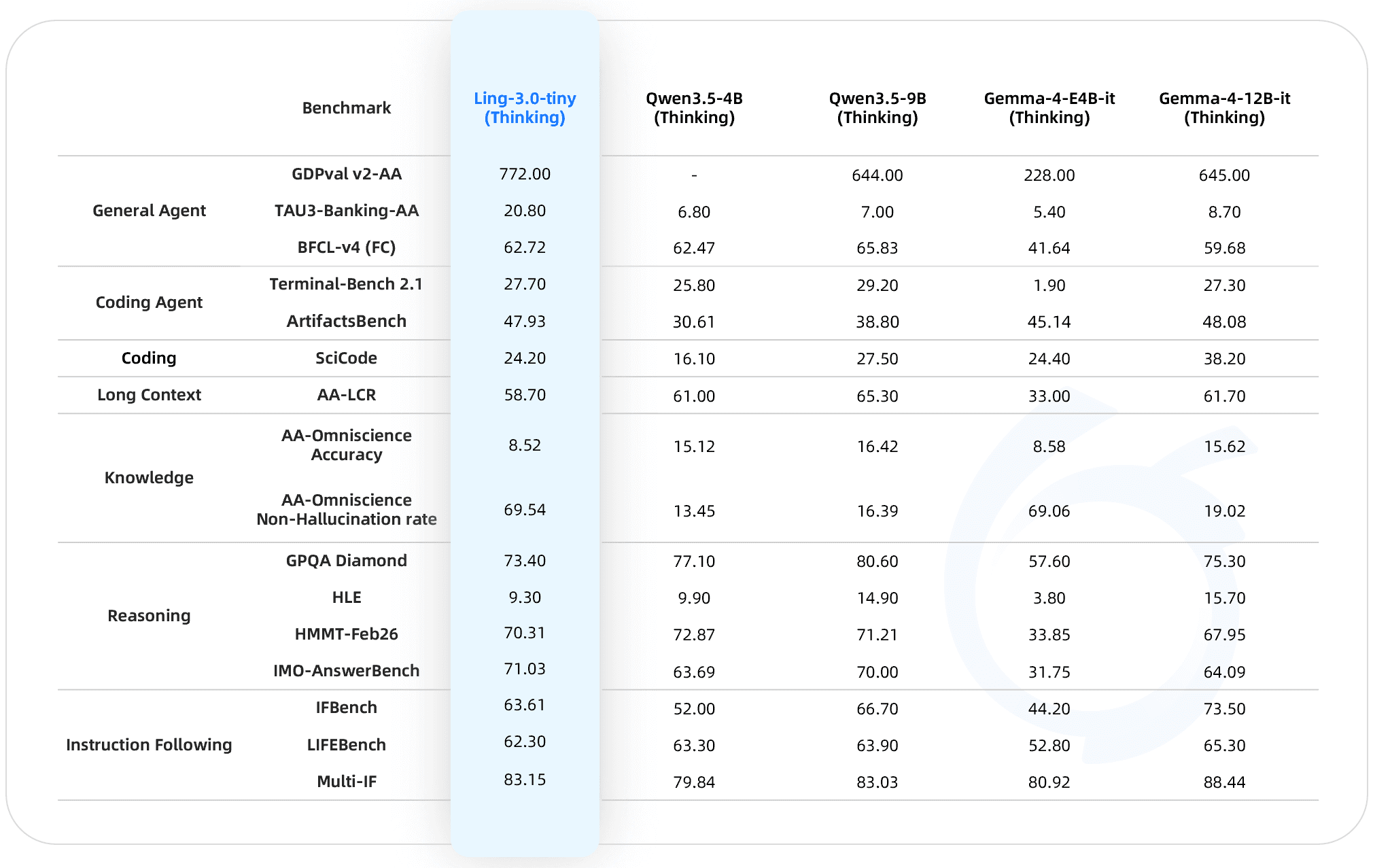
inclusionAI has published Ling-3.0-tiny, a compact language model built on a hybrid mixture-of-experts (MoE) architecture. The model is available now on Hugging Face and is distributed under the MIT license, one of the most permissive terms in open-source software.
The "tiny" label positions this release as the entry point in the Ling 3.0 family, aimed at developers who want a lighter footprint without abandoning the efficiency gains that MoE designs promise. Mixture-of-experts models activate only a subset of their parameters for any given token, which can deliver strong quality per unit of compute compared with dense models of similar size.
Why it matters
Permissive licensing remains a decisive factor for teams choosing which open models to build on. MIT terms allow commercial use, modification, and redistribution with minimal restrictions, lowering the barrier for startups and researchers who want to fine-tune or embed the model in their own products.
- Hybrid MoE architecture for efficient inference
- MIT license, suitable for commercial deployment
- Text generation as the primary modality
The release record does not specify parameter counts, context length, or benchmark results, so builders will want to consult the model card directly before committing to production use. As the first public entry in the Ling 3.0 line, it also signals where inclusionAI intends to take the family next.
Sources
- Visit
inclusionAI/Ling-3.0-tiny
Hugging Face
More in Text / LLM
Allen Institute Open-Sources AstaBrief Report Model
The fast report-generation model behind AI2's Asta research assistant is now available under an Apache 2.0 license.

Aleph Alpha releases Kolibri, a sovereign reasoning model
The German AI company's open-weight mixture-of-experts model targets European needs with strong German and English reasoning.
Fastino's GLiNER2.5-Decide targets lean NLP tasks
A sub-1B model bundling entity extraction, intent, sentiment and topic classification arrives on Hugging Face.
0 comments
No comments yet. Be the first to weigh in.