inclusionAI's Ming-Image targets graphic design
A new MIT-licensed text-to-image model leans into legible text rendering and transparent RGBA output for design work.
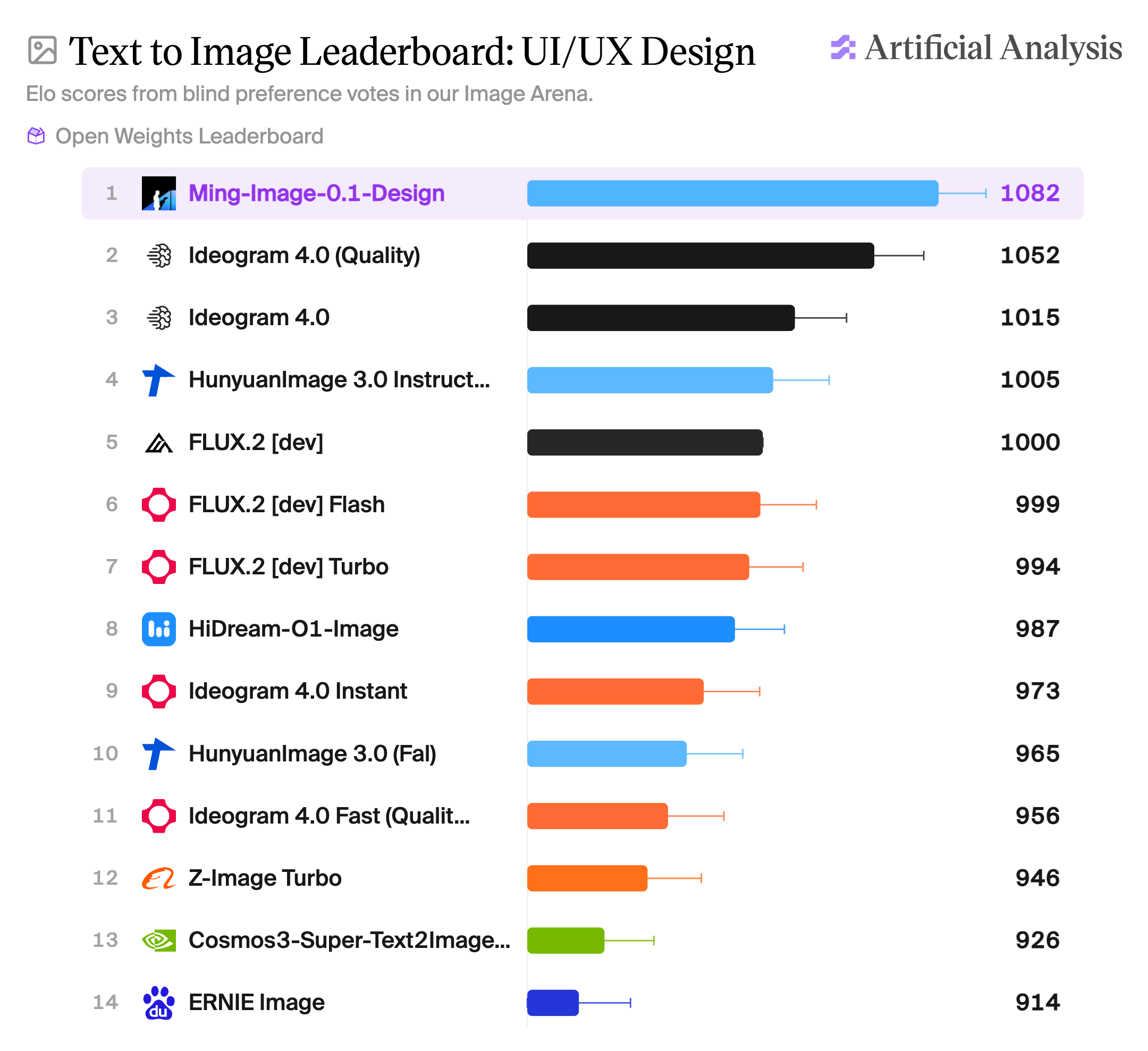
inclusionAI has released Ming-Image-0.1-Design, a text-to-image model aimed squarely at graphic design rather than general-purpose image generation. According to its Hugging Face repository, the model emphasizes two capabilities that matter most to designers: accurate in-image text rendering and RGBA output with transparency support.
Those priorities set it apart from the crowd. Most open image models still struggle to spell words correctly inside a generated image, and few produce assets with a genuine alpha channel. By focusing on legible typography and transparent backgrounds, Ming-Image positions itself for practical layout, logo, and asset-creation tasks where a flat JPEG simply won't do.
Why it matters
Design workflows have specific needs that general text-to-image systems often overlook:
- Text rendering that stays readable is essential for posters, banners, and UI mockups.
- RGBA output lets generated elements drop directly into compositions without manual background removal.
- An MIT license gives studios and developers permissive freedom to build the model into commercial tools.
This is an initial 0.1 release, so expectations should be calibrated accordingly — the version label signals early-stage software, and inclusionAI has not published parameter counts or resolution specifications. Still, the permissive licensing and clear design focus make it a model worth watching for anyone building creative tooling on open weights. Interested users can find the weights and details on its Hugging Face page.
Sources
- Visit
inclusionAI/Ming-Image-0.1-Design
Hugging Face
More in Text → Image
Qwen-Image-2.1 Adds RGBA to Image Generation
Alibaba's Qwen team updates its open image model with transparency support and joint text-to-image and editing capabilities.
SenseTime's SenseNova-U1.5 Unifies Vision Tasks
An 8B model drops the usual encoder and VAE in favor of a single native architecture spanning understanding, reasoning, and image generation.
LLaDA-Image: A Fully Open 6B Image Generator
inclusionAI pairs a diffusion transformer with a frozen vision-language model and publishes the entire training recipe.
0 comments
No comments yet. Be the first to weigh in.