inclusionAI releases Ling-3.1-flash under MIT license
A new hybrid mixture-of-experts text model arrives on Hugging Face with permissive licensing and a focus on fast inference.
inclusionAI has published Ling-3.1-flash, a text-focused language model built on a hybrid mixture-of-experts (MoE) architecture and released under the permissive MIT license. The model is now available on Hugging Face.
The "flash" naming signals a model tuned for efficiency, a common design goal for MoE systems that activate only a subset of parameters per token to keep inference costs down. inclusionAI has not published detailed specifications such as total or active parameter counts or context length alongside this release, so builders will want to inspect the repository configuration directly before committing to deployment.
Why it matters
The MIT license is the headline detail here. It places few restrictions on commercial use, modification, and redistribution, making Ling-3.1-flash notably more permissive than many open-weight releases that ship with custom or usage-restricted terms.
- Hybrid MoE design aimed at efficient inference
- Permissive MIT licensing for broad reuse
- Text-only modality, suitable for standard LLM workloads
As with any sparsely specified launch, the practical value will depend on independent testing and the community's evaluation of throughput and quality. For now, Ling-3.1-flash adds another openly licensed option to a crowded field of MoE language models, and its licensing alone makes it worth a look for teams wary of restrictive terms.
Sources
- Visit
inclusionAI/Ling-3.1-flash
Hugging Face
More from inclusionAI
All inclusionAI releases →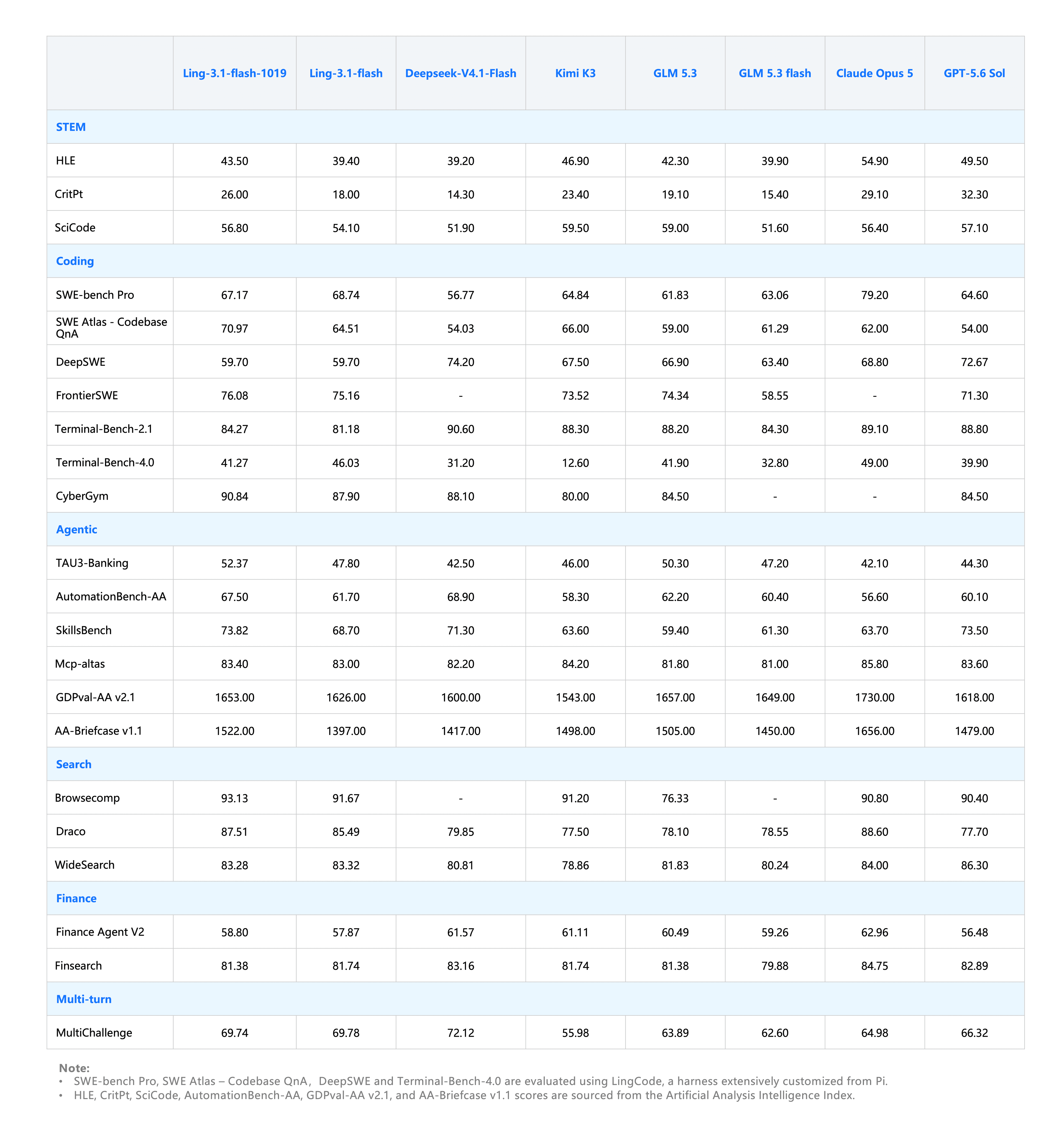
inclusionAI releases Ling-3.1-flash, an MIT MoE model
The new text model pairs a hybrid mixture-of-experts design with FP8 weights under a permissive license.
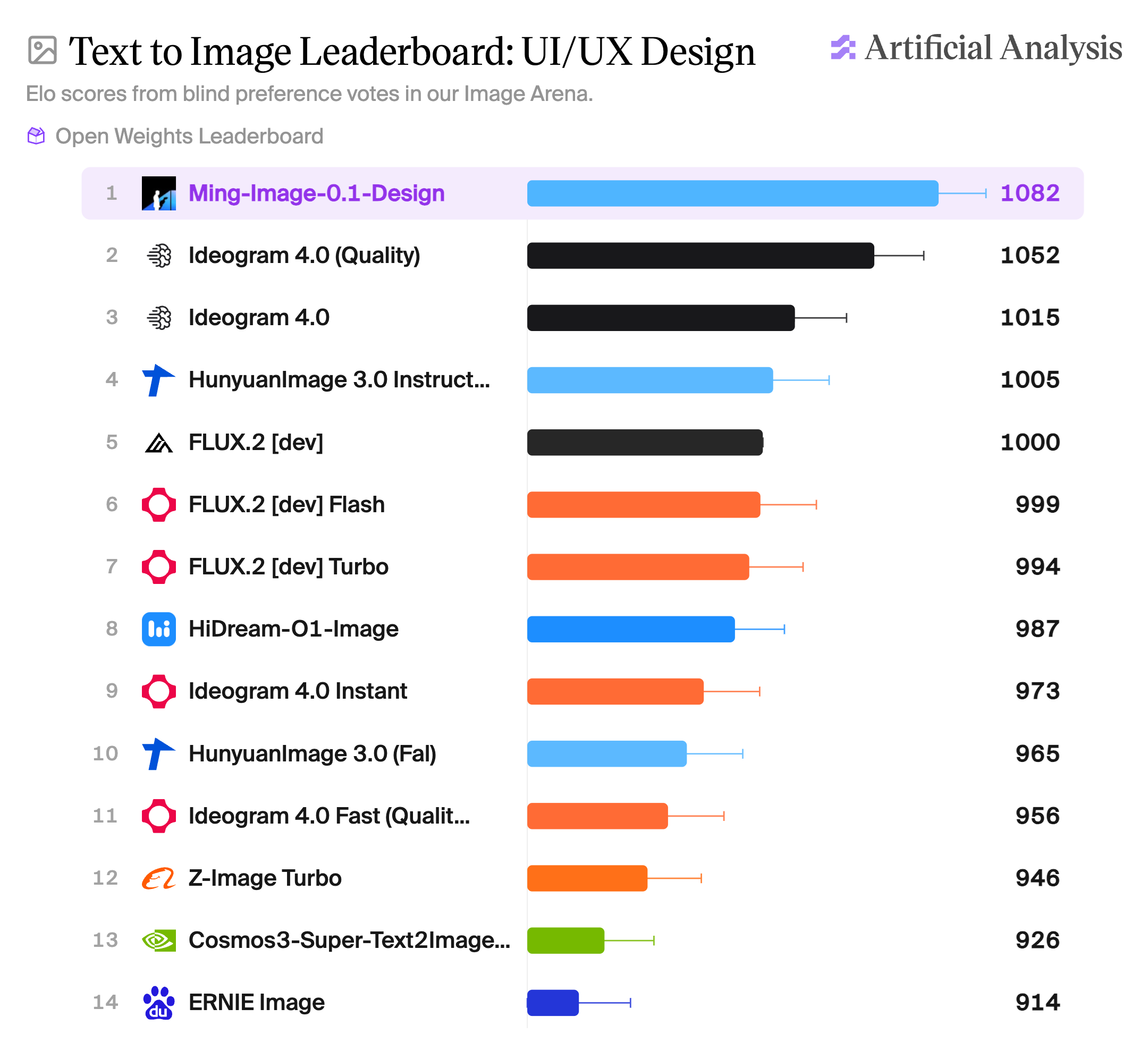
inclusionAI's Ming-Image targets graphic design
A new MIT-licensed text-to-image model leans into legible text rendering and transparent RGBA output for design work.
LLaDA-UI Brings Diffusion Decoding to GUI Agents
inclusionAI's 16.7B MoE vision-language model uses block-wise diffusion to drive graphical interface tasks.
More in Text / LLM
All Text / LLM →Meta AI debuts Muse Ember, a compact open model
The company's smallest, most efficient open-weight language model targets lean, on-device text workloads.
Thinking Machines ships Inkling-2-Small, an open MoE VLM
The Apache-2.0 vision-language model uses a mixture-of-experts design and lands openly on Hugging Face.
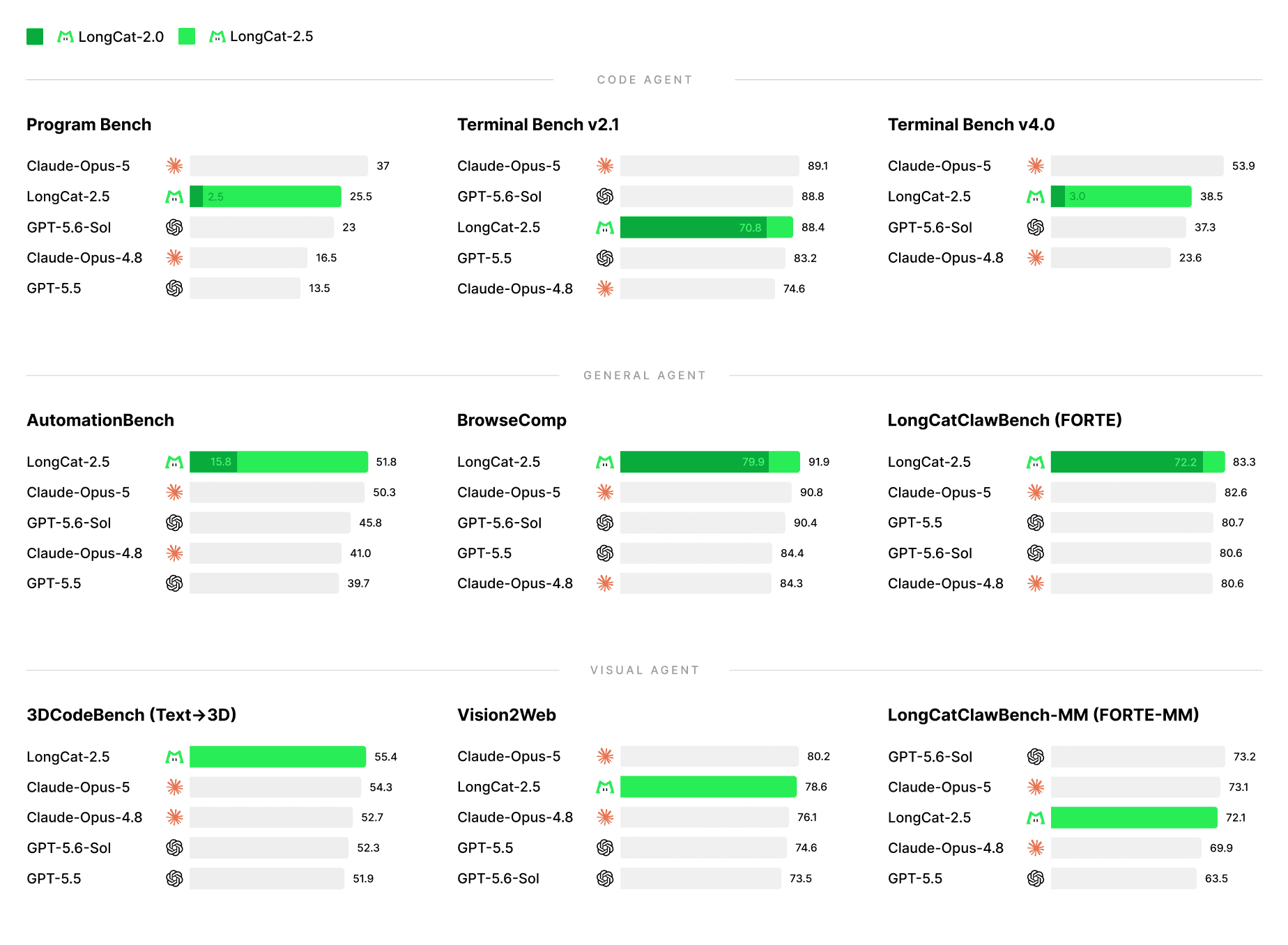
Meituan Releases LongCat 2.5, an MIT-Licensed MoE
The Chinese delivery giant expands its open-model push with a multimodal, agentic mixture-of-experts system.
0 comments
No comments yet. Be the first to weigh in.