Zing-0.5 aims for playable worlds in real time
A 5B-parameter autoregressive world model blends action and text control to generate interactive environments on the fly.
A new research effort called Zing-0.5 is pushing on one of the more ambitious frontiers in generative AI: models that don't just produce images or video, but simulate interactive worlds you can act inside. According to the paper published on Hugging Face, the 5B-parameter autoregressive model is designed to generate playable environments in real time, taking both player actions and text instructions as control signals.
The combination is the interesting part. Most world models to date have leaned on either action conditioning—predicting the next frame given a controller input—or text conditioning for scene setup. Zing-0.5 folds both into a single autoregressive system, so a user can steer a world by moving through it while also reshaping it with language prompts.
Why it matters
Real-time interactivity is the hard constraint here. Generating coherent, controllable frames fast enough to feel like a game is a very different problem from rendering a polished video clip offline. Keeping the parameter count at 5B is a deliberate nod to that: smaller models are easier to run at the latencies interactivity demands.
- Autoregressive generation of interactive worlds
- Joint control from both actions and text
- A 5B footprint aimed at real-time performance
This is an early, "0.5" release, and the record lists it as announced rather than broadly available, so practical details like context length and licensing terms remain thin. Still, it's a concrete data point in the fast-moving race toward neural game engines and simulators, where the goal is a model that behaves less like a camera and more like a world.
Sources
- Visit
Zing-0.5: Toward Playable Worlds with Real-Time Joint Action and Text Control
HF Papers
More in Any-to-Any
StepFun's StepAudio 3 Realtime targets live voice AI
The audio-language foundation model builds a listen-converse-think-act loop aimed at natural, low-latency spoken interaction.
SenseTime's SenseNova-U1.5 Unifies Vision Tasks
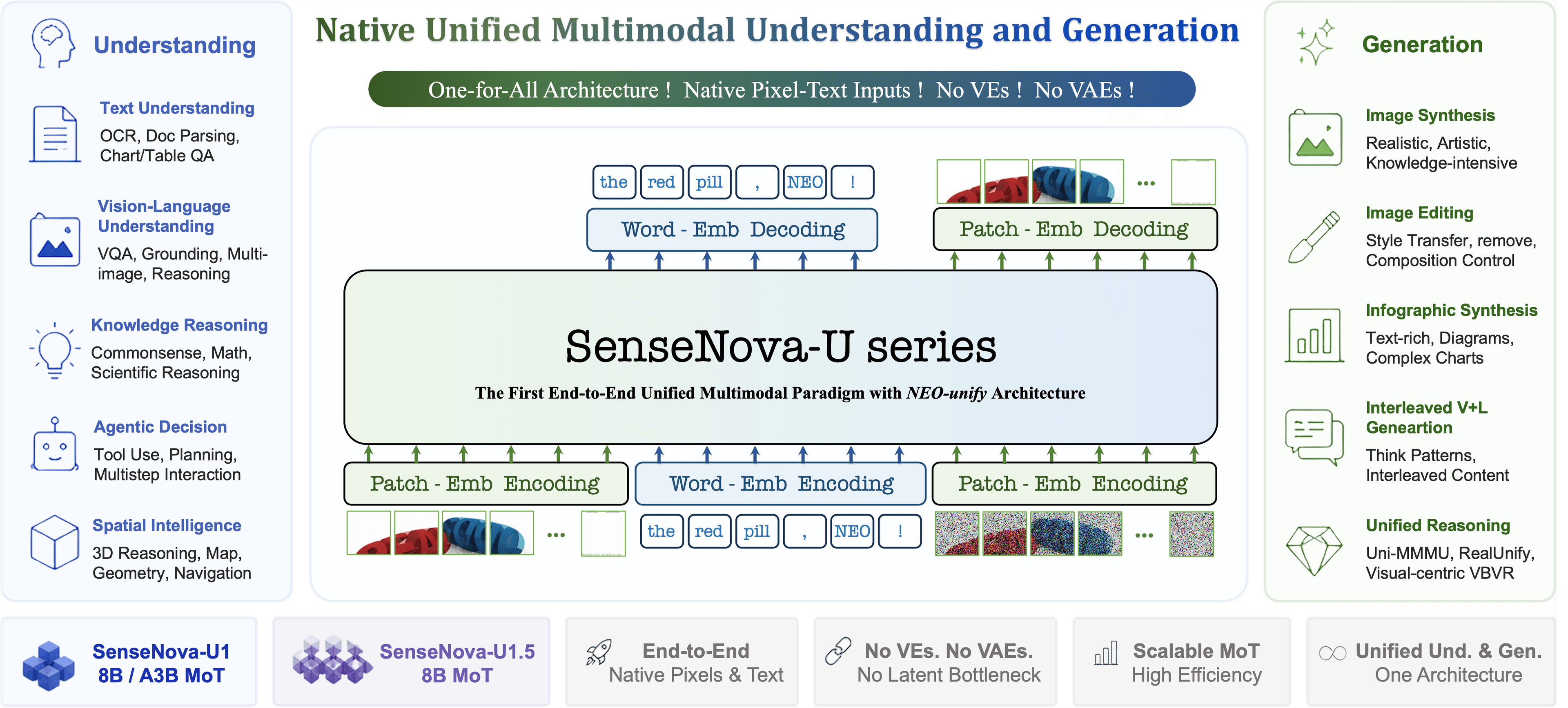
An 8B model drops the usual encoder and VAE in favor of a single native architecture spanning understanding, reasoning, and image generation.
SenseTime Releases SenseNova U1.5 8B Any-to-Any Model
The new 8B multimodal model handles text, images, and image editing within a single native architecture.
0 comments
No comments yet. Be the first to weigh in.