NVIDIA's Nemotron-3 Brings Streaming Speaker Diarization
The new open model applies NVIDIA's Sortformer approach to identify who's speaking, in real time.
NVIDIA has released Nemotron-3-Diarization, an open model focused on a specific but persistently tricky part of the speech pipeline: figuring out who is speaking and when. The model is built on NVIDIA's Sortformer architecture and is designed to run in a streaming fashion, meaning it can attribute speech to speakers as audio arrives rather than waiting for a full recording.
Speaker diarization is the connective tissue between raw transcription and usable output. Automatic speech recognition tells you what was said; diarization tells you who said it. For meeting notes, call-center analytics, captioning, and any transcript involving more than one voice, that distinction is what turns a wall of text into a readable, attributable conversation.
Why it matters
The streaming angle is the notable part here. Many diarization systems operate offline, clustering speaker segments after the fact. A model that can label speakers on the fly opens the door to live use cases:
- Real-time captioning that separates participants
- Live meeting and call transcription with speaker tags
- Lower-latency pipelines that pair with streaming ASR
As the first entry under the Nemotron-3-Diarization name, this release gives developers a purpose-built diarization component they can slot alongside NVIDIA's broader speech stack. The model is distributed on Hugging Face under a custom license, so teams weighing it for production should review the terms before building on it.
Sources
- Visit
nvidia/Nemotron-3-Diarization
Hugging Face
More in Speech → Text
Moondream shrinks Parakeet ASR for CPUs
A ternary-quantized take on the Parakeet TDT speech model aims to run transcription without a GPU.
StepFun's StepAudio 3 Realtime targets live voice AI
The audio-language foundation model builds a listen-converse-think-act loop aimed at natural, low-latency spoken interaction.
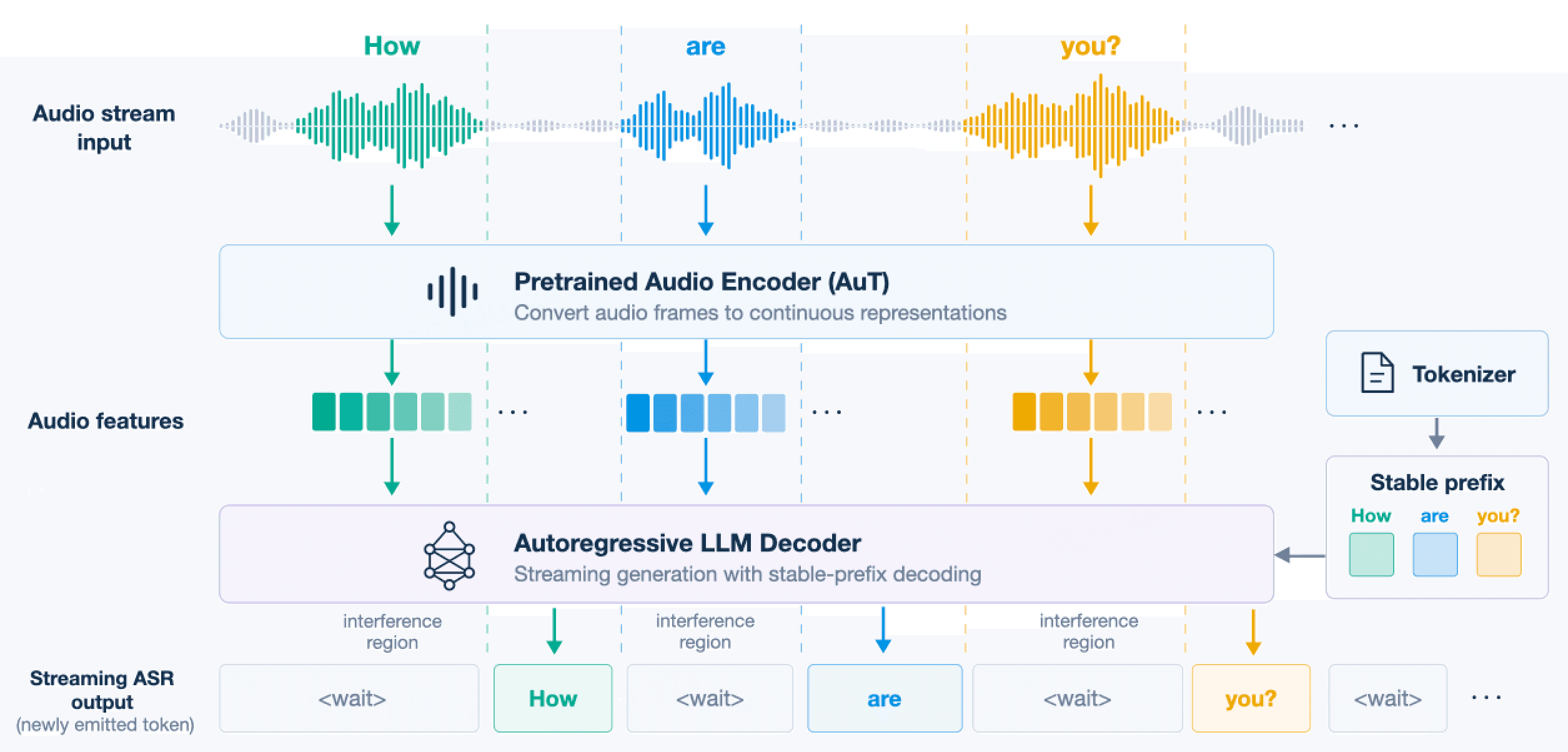
NetEase Youdao debuts Confucius4-R2T2 streaming ASR
The multilingual speech-to-text model targets low latency and ships with vLLM support for production deployments.
0 comments
No comments yet. Be the first to weigh in.