Ming-Lite-Omni 1.5 Brings Any-to-Any Modality to Open Source
The new MIT-licensed model from inclusionAI can process and generate a mix of text, images, audio, and video, pushing the boundaries of open multimodal AI.

Startup inclusionAI has released Ming-Lite-Omni 1.5, a new open-source model designed to handle a wide array of data types simultaneously. Published under a permissive MIT license, the model aims to provide "any-to-any" omni-modal capabilities, a significant step forward for generalized AI research and development. The model and its components are available now on Hugging Face.
Unlike many multimodal models that operate on a fixed input-to-output path (like text-to-image), an omni-modal system is designed to fluidly process and generate content across various formats. Ming-Lite-Omni can reportedly understand and create content using text, images, audio, and video, allowing for more complex and integrated AI applications.
A Flexible Foundation for Multimodal AI
The model's true significance lies in its combination of advanced architecture and an unrestrictive license. This opens the door for developers and researchers to experiment with sophisticated multimodal tasks that have largely been the domain of closed, proprietary systems. Potential applications could include:
- Generating a video with a descriptive soundtrack from a single text prompt.
- Creating a detailed textual summary of an audio-visual recording.
- Answering questions about a video by analyzing both its frames and its spoken audio.
While specific benchmarks have not been released, the "Lite" designation in its name suggests that Ming-Lite-Omni may be a more computationally accessible version of this complex technology. Its release provides a valuable new tool for building the next generation of AI that can see, hear, and communicate in multiple dimensions.
Sources
- Visit
inclusionAI/Ming-Lite-Omni-1.5
Hugging Face
More from inclusionAI
All inclusionAI releases →
inclusionAI releases Ling-3.1-flash under MIT license
A new hybrid mixture-of-experts text model arrives on Hugging Face with permissive licensing and a focus on fast inference.
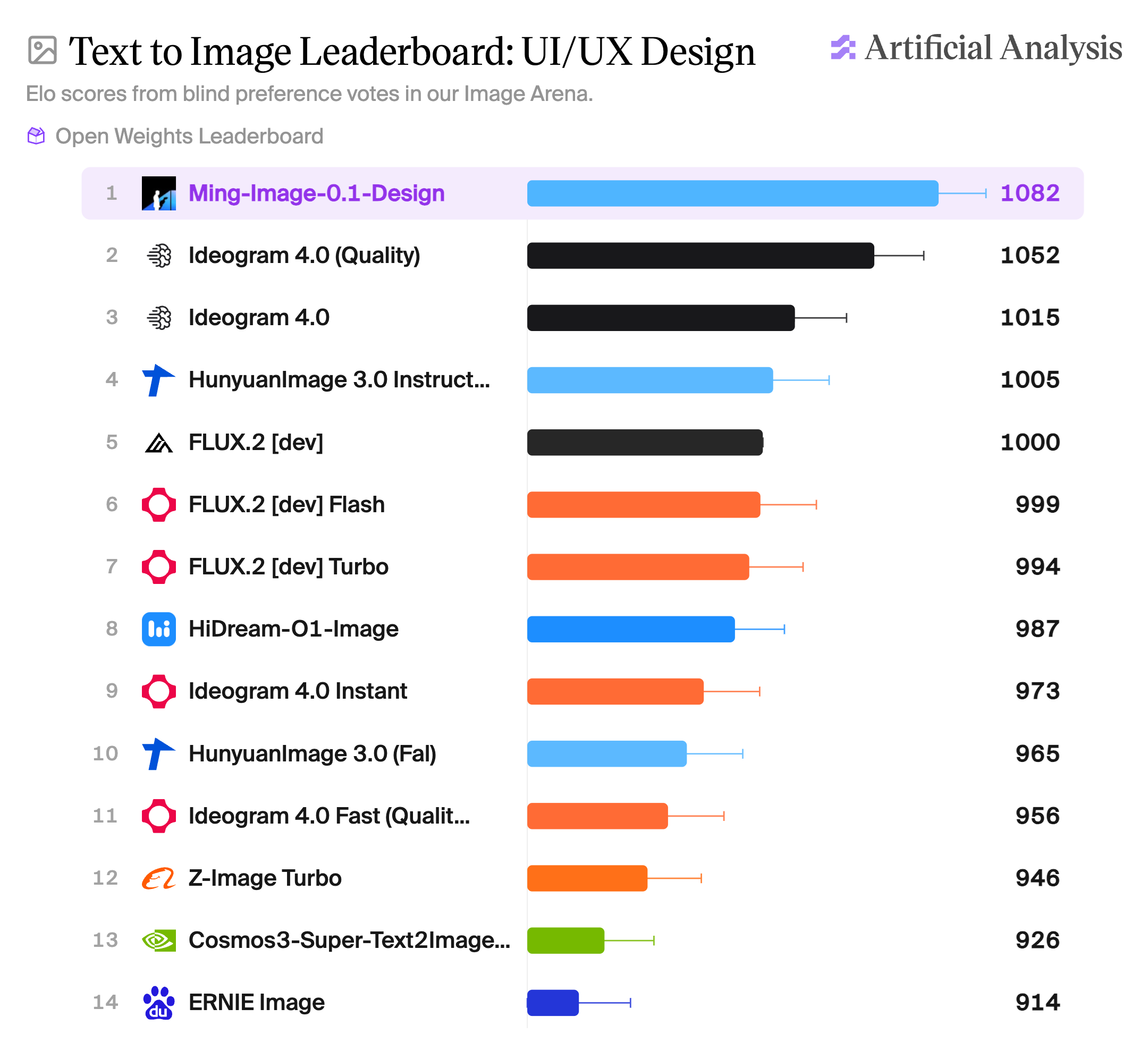
inclusionAI's Ming-Image targets graphic design
A new MIT-licensed text-to-image model leans into legible text rendering and transparent RGBA output for design work.
LLaDA-UI Brings Diffusion Decoding to GUI Agents
inclusionAI's 16.7B MoE vision-language model uses block-wise diffusion to drive graphical interface tasks.
More in Any-to-Any
All Any-to-Any →
Liquid AI's LFM3-Omni-2B brings any-to-any AI to the edge
The 2-billion-parameter model combines vision, audio and speech-to-speech in a package small enough to run on device.
MiniMax Debuts M3.1 Flash, a Multimodal MoE Model
The new release pairs a mixture-of-experts design with agentic, coding, and video-understanding abilities in a single open model.
IBM's Granite Switch 4.1 Unifies Chat, Logic, Speech
A single endpoint now routes text conversation, decision-making, and speech synthesis across IBM's Apache-licensed Granite line.
0 comments
No comments yet. Be the first to weigh in.