Liquid AI's LFM2.5-DSpark targets faster inference
The company's latest LFM2.5 variant promises up to 3.2x faster inference without leaning on cloud-scale hardware.
Liquid AI has released LFM2.5-DSpark, a text-generation model that the company positions around one central claim: up to 3.2x faster inference compared with prior approaches. The release was announced through Liquid AI's Hugging Face blog.
The emphasis on inference speed fits Liquid AI's broader strategy. The company's LFM line has consistently prioritized efficiency—getting more throughput per unit of compute—rather than chasing the largest possible parameter counts. DSpark continues that thread, framing performance in terms of how quickly the model responds rather than how it ranks on leaderboards.
Why it matters
Inference cost, not training cost, is what most teams pay for once a model is in production. Faster generation translates directly into lower serving bills, snappier user experiences, and the ability to run on more modest hardware. A few practical implications:
- Lower latency for interactive applications like chat and assistants
- Reduced per-token serving costs at scale
- More headroom to deploy on constrained or edge-adjacent hardware
Liquid AI has not published detailed benchmark tables, parameter counts, or context-length figures alongside this announcement, so independent verification of the 3.2x figure and its baseline will matter. For teams evaluating the model, the official post is the place to confirm the specifics before committing to a deployment.
Sources
- Visit
Up to 3.2x Faster Inference with LFM2.5-DSpark
Announcement
More in Text / LLM
Allen Institute Open-Sources AstaBrief Report Model
The fast report-generation model behind AI2's Asta research assistant is now available under an Apache 2.0 license.

Aleph Alpha releases Kolibri, a sovereign reasoning model
The German AI company's open-weight mixture-of-experts model targets European needs with strong German and English reasoning.
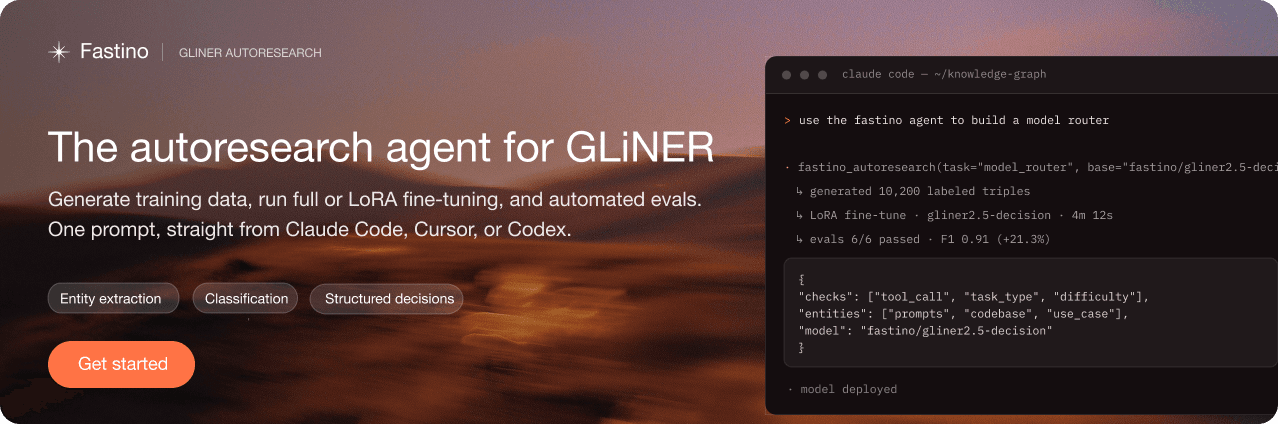
Fastino's GLiNER2.5-Decide targets lean NLP tasks
A sub-1B model bundling entity extraction, intent, sentiment and topic classification arrives on Hugging Face.
0 comments
No comments yet. Be the first to weigh in.