Tencent's Voyager Model Turns Images into 3D Worlds
The new model from Tencent AI Lab generates temporally and spatially consistent video sequences from a single image, enabling virtual exploration of static scenes.
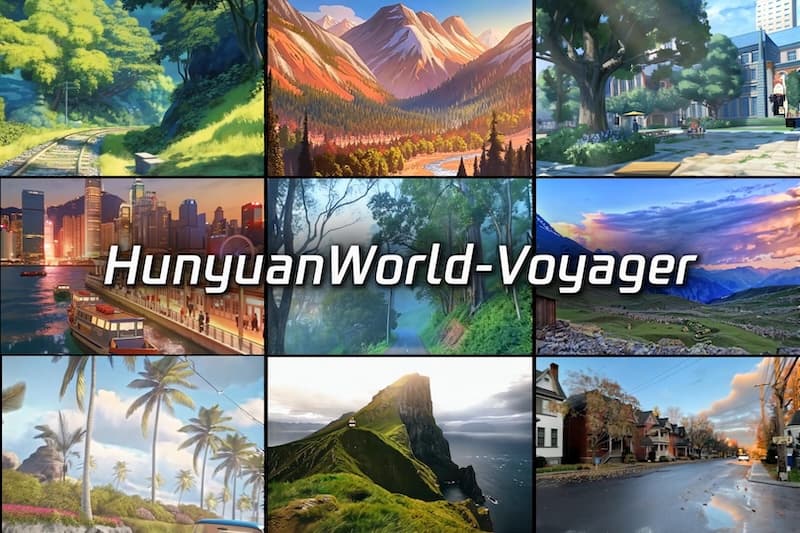
Tencent has released the weights for HunyuanWorld-Voyager, a new generative model capable of creating dynamic, explorable video scenes from a single static image. The model functions as a 'world model,' building an internal 3D representation of the scene to ensure consistency as the virtual camera moves.
The system uses a two-stage process. First, a 3D-aware diffusion transformer generates a novel view from the input image. Then, a camera-controlled video diffusion model takes over to produce extended video sequences, allowing the user to 'voyage' through the newly created 3D environment with consistent object permanence and spatial logic.
Why It Matters
HunyuanWorld-Voyager represents another step toward generative AI that understands and can simulate coherent, interactive worlds, not just produce isolated outputs. While most image-to-video models create short, fixed clips, Voyager's ability to generate longer, camera-controlled sequences from a single frame opens up possibilities for content creation, simulation, and virtual environment prototyping.
The model weights and a demo are available on the Hugging Face Hub. It is released under a custom 'HunyuanWorld Research Community License Agreement,' which restricts its use primarily to academic and research purposes, so users should review the terms before integrating it into any projects.
Sources
- Visit
tencent/HunyuanWorld-Voyager
Hugging Face
More in Image → Video

Viggle Releases Viggle-Animate for Character Swaps
The open image-to-video model targets character replacement and video editing, distilled from MiniMax-H3.

Ant Research releases 4DAnyone for 4D human video
The new open model turns a single input into multiview video and reconstructs humans for novel-view synthesis.

MiniMax Releases H3 Video Model on Hugging Face
The company's new diffusion model handles text-to-video and image-to-video, with support for joint audio-video generation.
0 comments
No comments yet. Be the first to weigh in.