NVIDIA distills Qwen-Image for few-step generation
A DMD2-distilled build of Qwen-Image trades sampling steps for speed while keeping the original model's output profile.
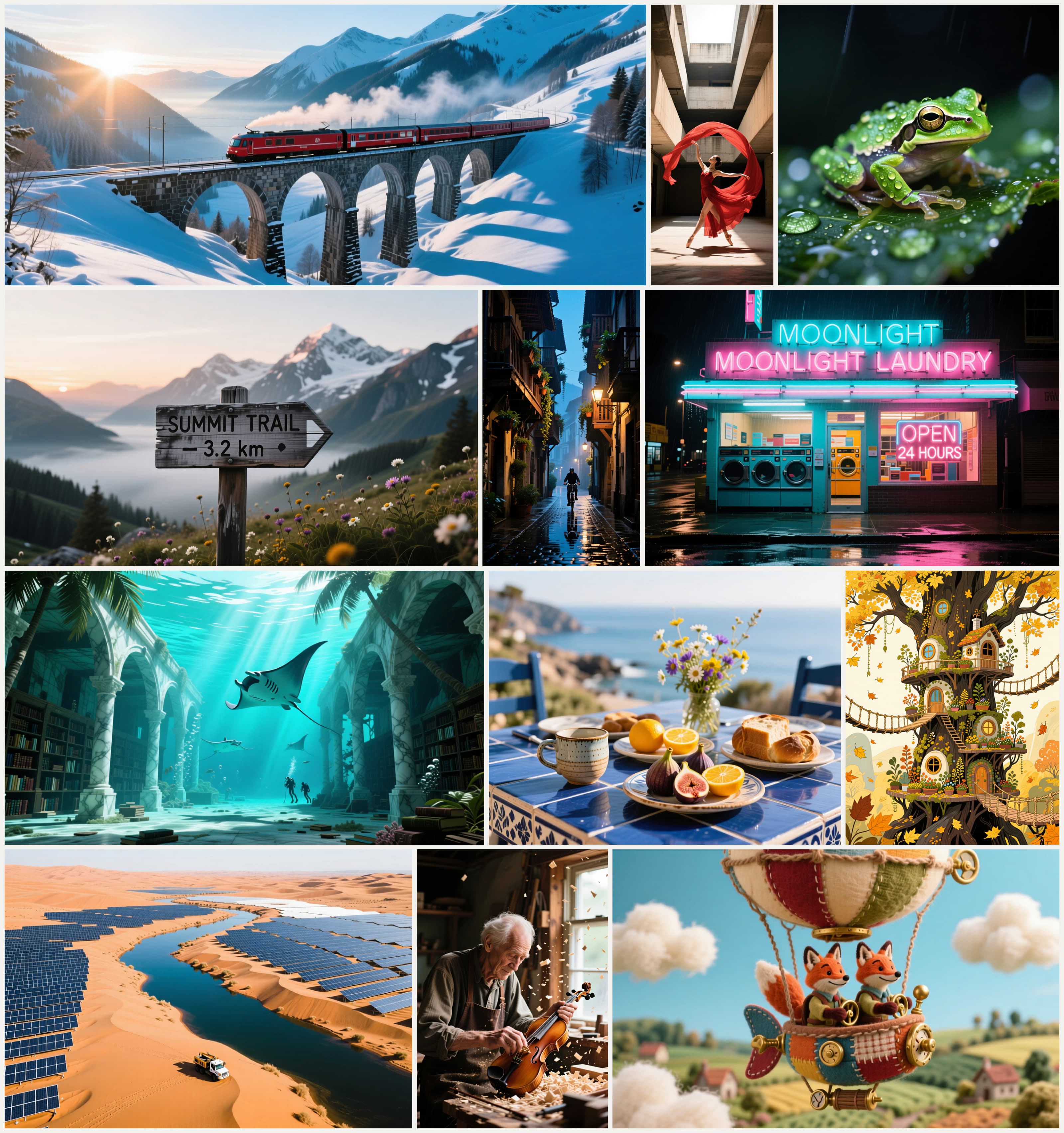
NVIDIA has published Qwen-Image-Flash, a distilled variant of the Qwen-Image text-to-image model designed to produce images in far fewer sampling steps than the base model. The release targets one of the most persistent pain points in diffusion-style generation: the number of iterative steps required to render a single image.
The model uses DMD2, a distillation method that trains a compact student to reproduce the behavior of a slower, many-step teacher in just a handful of passes. In practice, that means the same prompts can be turned into finished images with a fraction of the compute, which matters for interactive tools, high-volume pipelines, and anyone running generation locally rather than on a large server.
Why it matters
Few-step distillation has become a standard way to make image models practical outside of data centers. By taking an existing open model and shrinking its inference budget, NVIDIA lowers the cost and latency of each generation without asking users to adopt an entirely new architecture.
- Built as a distilled version of Qwen-Image, so it inherits that model's output style
- Uses DMD2 distillation to enable few-step sampling
- Focused purely on text-to-image generation
The repository is available now on Hugging Face under a custom license, so teams evaluating it should check the terms before deploying. As with most distilled models, the practical question will be how closely Flash's speedups preserve the fidelity and prompt-following of the full Qwen-Image model in real workloads.
Sources
- Visit
nvidia/Qwen-Image-Flash
Hugging Face
More in Text → Image
SenseTime's SenseNova-U1.5 Unifies Vision Tasks
An 8B model drops the usual encoder and VAE in favor of a single native architecture spanning understanding, reasoning, and image generation.
LLaDA-Image: A Fully Open 6B Image Generator
inclusionAI pairs a diffusion transformer with a frozen vision-language model and publishes the entire training recipe.
Kroma: An MIT-Licensed Text-to-Image Model for ComfyUI
Lodestones releases an open image generator built on the Krea 2 lineage, aimed squarely at ComfyUI workflows.
0 comments
No comments yet. Be the first to weigh in.