Cactus Compute's Mirage brings vision tasks on-device
The new open vision-language model targets detection, segmentation, and visual Q&A without relying on the cloud.
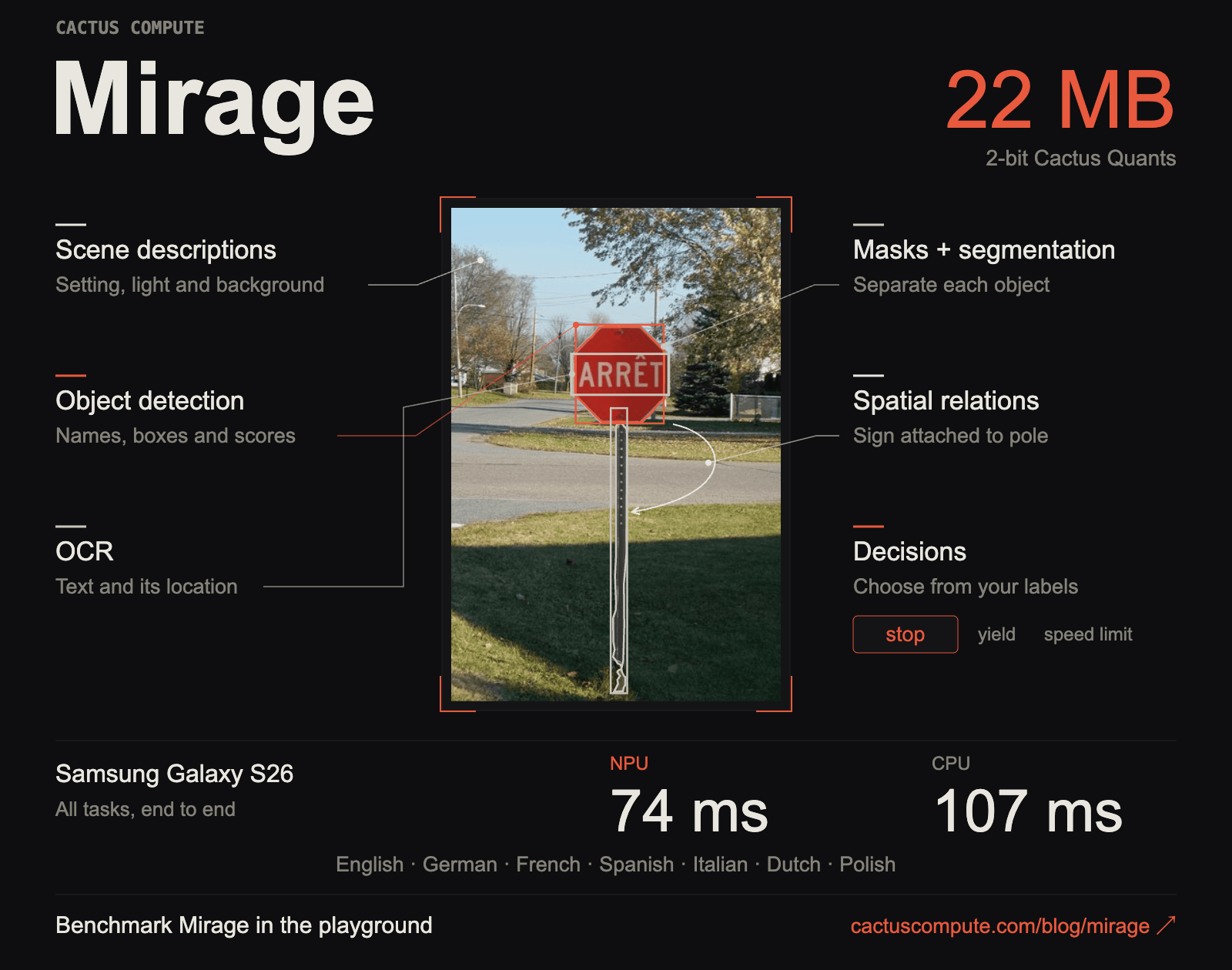
Cactus Compute has released Mirage, a vision-language model designed to run directly on-device. Rather than routing images through a remote API, Mirage is built to handle visual understanding locally, spanning detection, segmentation, and visual question answering within a single model.
That combination is notable. Many compact vision models specialize in one task, but Mirage positions itself as a more general-purpose tool that can both localize objects and answer open-ended questions about what it sees. For developers building camera-driven apps, that flexibility can reduce the number of separate models an application needs to ship.
Why it matters
On-device inference has become one of the clearer trends in open-weights AI, driven by concerns about latency, cost, and privacy. Keeping vision workloads local means images never have to leave the device, which is appealing for consumer apps, robotics, and anything operating with intermittent connectivity.
- Runs on-device, avoiding cloud round-trips
- Supports detection, segmentation, and VQA in one model
- Released on Hugging Face under a custom license
Cactus Compute has not published detailed parameter counts, context length, or benchmark figures alongside this initial release, so independent evaluation will determine how Mirage holds up against established small vision-language models. The weights and documentation are available now on Hugging Face.
Sources
- Visit
Cactus-Compute/mirage
Hugging Face
More from Cactus Compute
All Cactus Compute releases →
Cactus Compute's Whistle brings speech-to-text to the edge
A compact on-device ASR model built for edge hardware and WebAssembly, with early support for English, German, and French.

Cactus Needle 3: tiny on-device tool-calling models
Cactus Compute's 8–29MB models aim to run automation and tool-calling entirely on-device, rivaling far larger cloud systems.

Needle2 Packs an Agentic LLM Into 14MB
Cactus Compute's tiny model brings tool and function calling to phones, wearables, and robots.
More in Vision-Language
All Vision-Language →
SenseTime Releases Looped 9B Multimodal Model
The company's new SenseNova-Loop-9B pairs vision-language capabilities with a recurrent looped-transformer design.
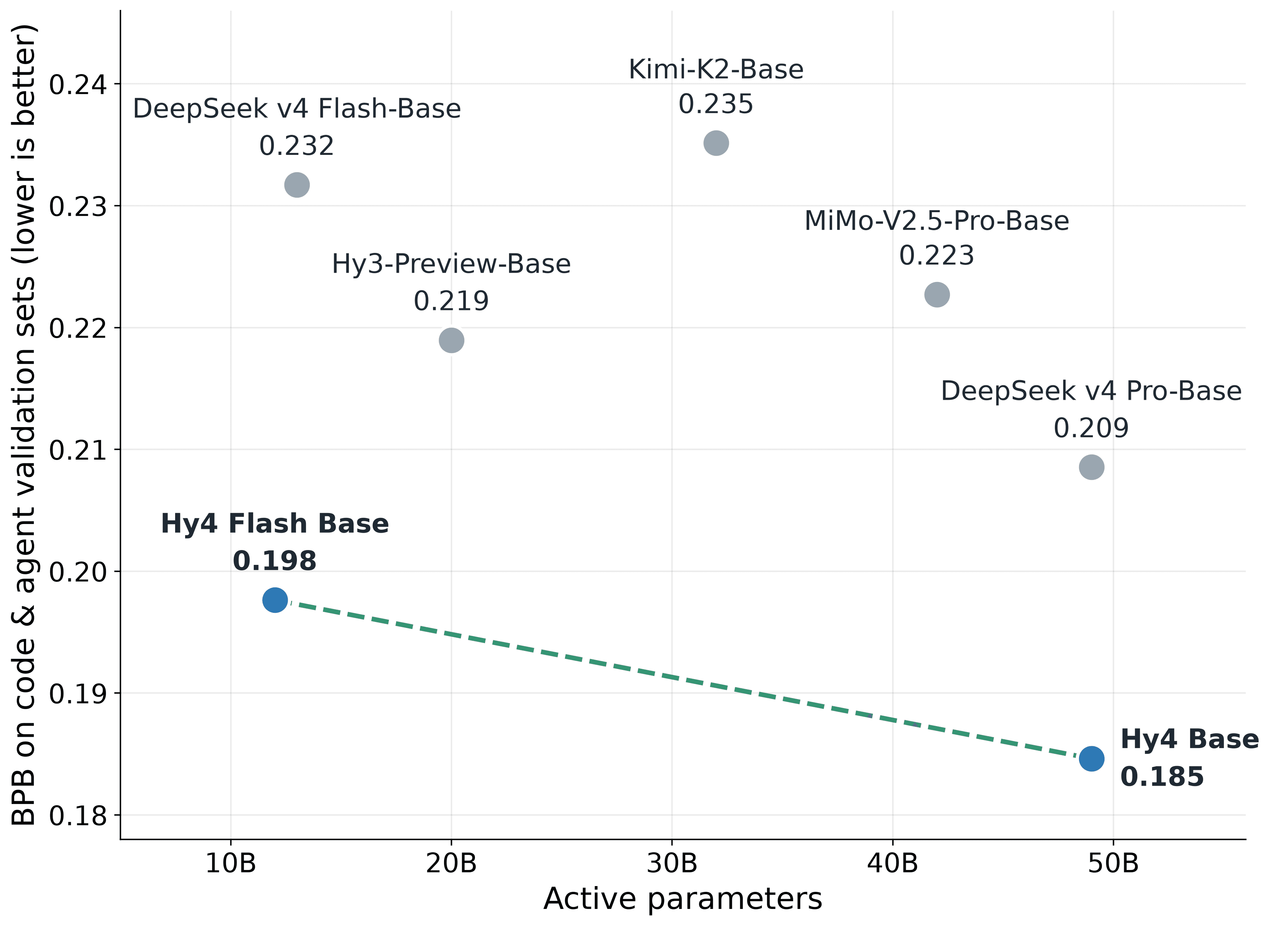
Tencent releases Hunyuan Hy4-flash multimodal MoE
The lightweight, mixture-of-experts model adds vision and text instruction-following to Tencent's open Hunyuan lineup.

Thinking Machines ships Inkling-2-Small, an open MoE VLM
The Apache-2.0 vision-language model uses a mixture-of-experts design and lands openly on Hugging Face.
0 comments
No comments yet. Be the first to weigh in.