LingBot-Video puts a 30B MoE behind embodied AI video
A DiT-based mixture-of-experts model activates just 3B parameters per step and ships under an Apache 2.0 license.

A new text-to-video model called LingBot-Video 30B-A3B has landed on Hugging Face, aimed squarely at embodied intelligence rather than general-purpose clip generation. The release pairs a diffusion transformer (DiT) backbone with a mixture-of-experts design, and it arrives under a permissive Apache 2.0 license (model card).
The naming tells the architectural story. Of its roughly 30 billion total parameters, only about 3 billion are active on any given forward pass — the "A3B" suffix. That sparse-activation approach is meant to give the model the capacity of a large network while keeping inference costs closer to those of a much smaller one.
Why it matters
Most open video models chase cinematic prompts and short social clips. Framing this one as a pretraining model for embodied intelligence points at a different use case: generating and predicting visual sequences that robots and agents can learn from, where a world model that anticipates how a scene unfolds is more useful than a polished trailer.
A few things stand out about this release:
- Sparse compute: 30B total parameters with only 3B active, via MoE routing.
- DiT foundation: a diffusion transformer backbone, now the dominant design for high-quality video generation.
- Open license: Apache 2.0 permits commercial use and fine-tuning without downstream restrictions.
Several practical details — resolution, frame rate, and maximum clip duration — aren't specified in the release record, so teams evaluating LingBot-Video for robotics or simulation work will want to test those limits directly. As a version 1.0 initial release, it establishes a baseline that later checkpoints can build on.
Sources
- Visit
robbyant/lingbot-video-moe-30b-a3b
Hugging Face
More from robbyant
All robbyant releases →
Lingbot-World Animates Images with Camera Control
The new open-source world model from researcher robbyant generates short video clips from a single image, giving users control over the virtual camera path.
More in Text → Video
All Text → Video →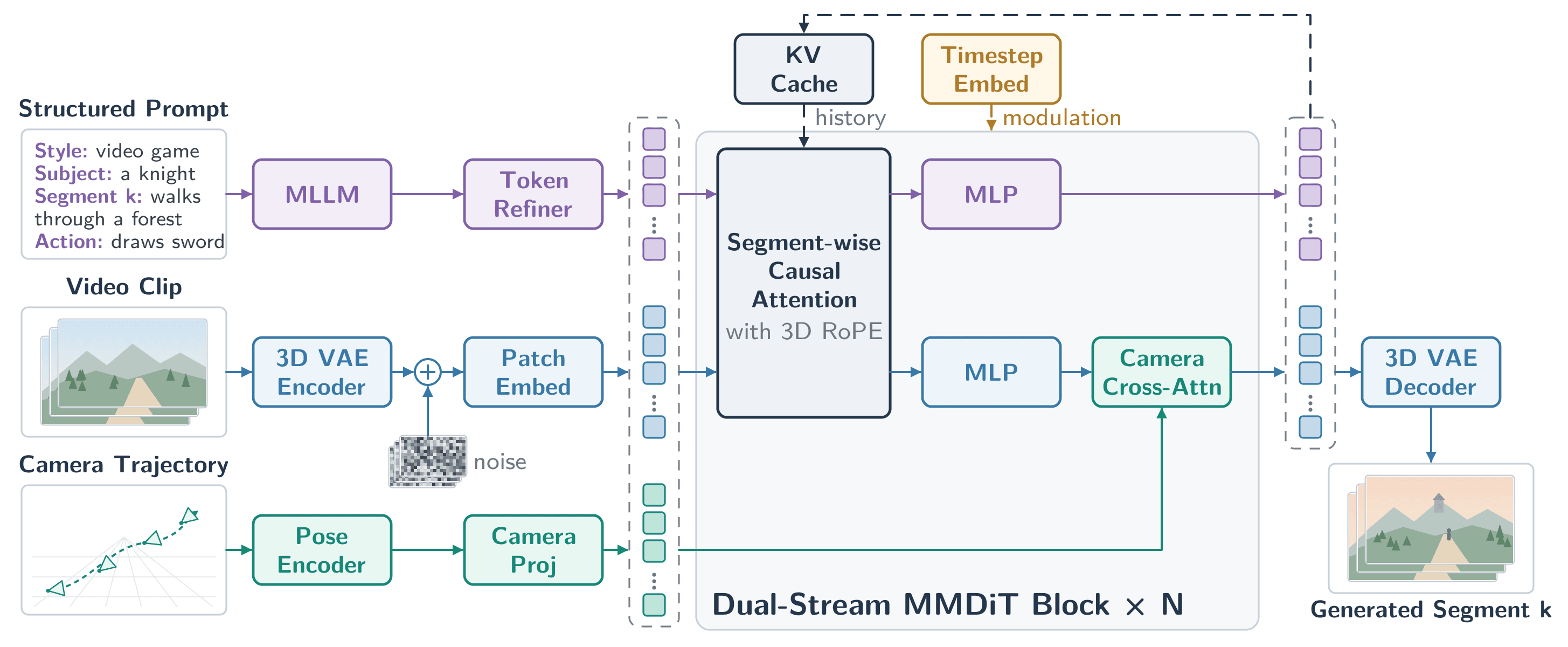
Tencent Releases Hy-Nomas, an Interactive Video World Model
The open-weights model pairs text- and image-to-video generation with action-aware causal attention and explicit camera control.
Kandinsky 6.0 Generates Video and Audio Together
Kandinsky Lab's new foundation models produce synchronized sound and motion from a text prompt, in 3B and 29B sizes.

MiniMax Releases H3 Video Model on Hugging Face
The company's new diffusion model handles text-to-video and image-to-video, with support for joint audio-video generation.
0 comments
No comments yet. Be the first to weigh in.