Boson AI's Higgs Audio v3 Offers Expressive, Multilingual TTS
The new 4-billion-parameter text-to-speech model is available for non-commercial use, promising fine-grained control over vocal delivery.
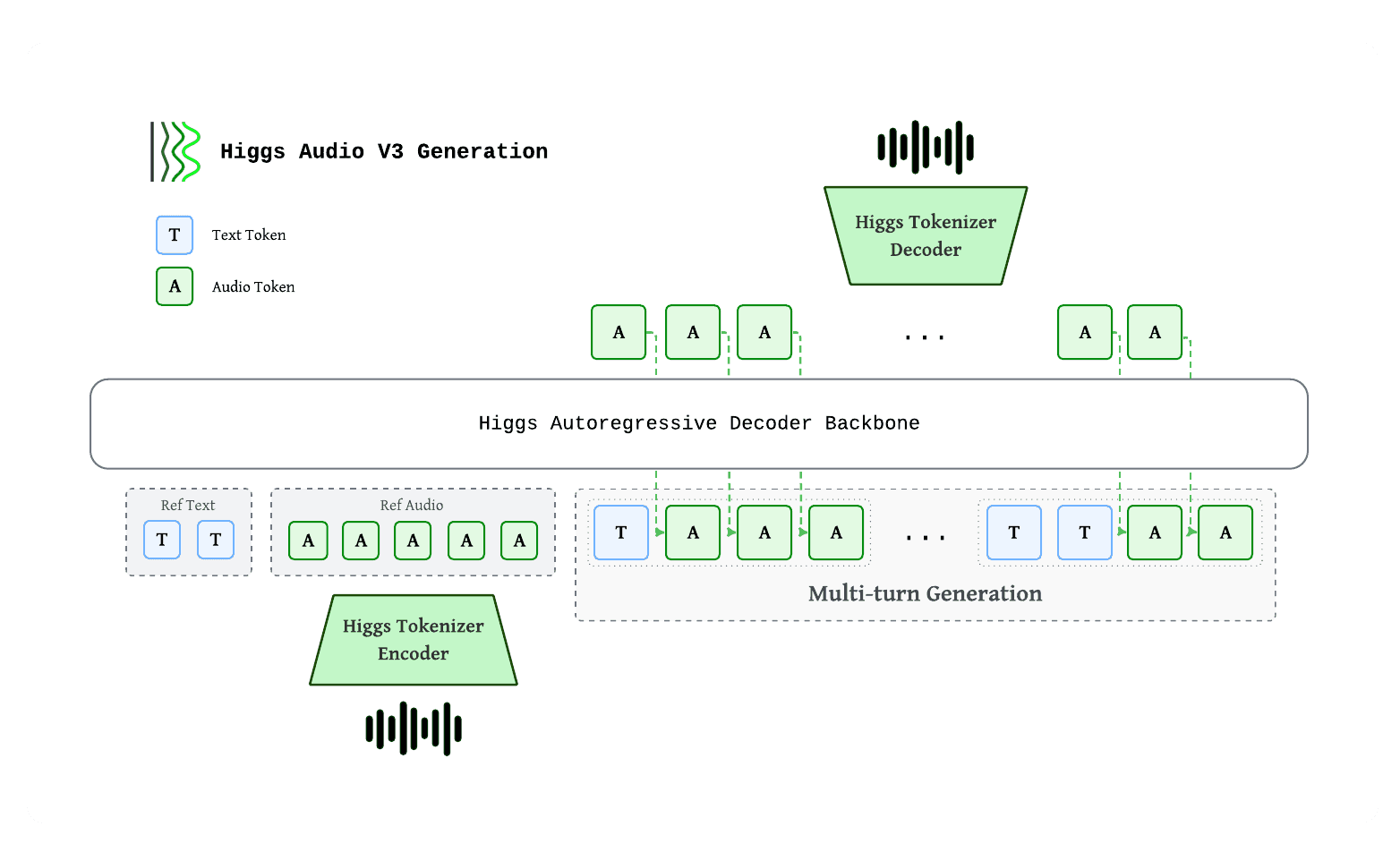
Boson AI has released Higgs Audio v3, a new 4-billion-parameter model for text-to-speech (TTS) synthesis. The model is designed to generate highly expressive and controllable speech across multiple languages, positioning it as a powerful new tool for creators and researchers in the open-source audio space.
Fine-Grained Vocal Control
The primary differentiator for Higgs Audio v3 is its focus on granular control over vocal delivery. The system allows users to influence the output's style, emotion, and prosody in two main ways:
- Text Prompts: Users can describe the desired vocal characteristics directly in a text prompt.
- Audio References: The model can also clone a voice and its style from a reference audio clip.
This dual-control mechanism provides flexibility for a range of applications, from character voice generation to dynamic audiobook narration. The model currently supports eight languages, including English, French, German, Spanish, and Polish.
Higgs Audio v3 enters a competitive field of open TTS models. Its 4B parameter size and emphasis on direct, prompt-based style control offer a compelling alternative for developers and creators who require more than just a simple voice clone. This level of expressiveness is critical for applications where emotional nuance and specific delivery are key.
The model is available for download from the Boson AI repository on Hugging Face. It has been released under a Creative Commons (CC-BY-NC-SA-4.0) license, which allows for broad non-commercial use and adaptation.
Sources
- Visit
bosonai/higgs-audio-v3-tts-4b
Hugging Face
More in Text → Speech
StepFun's StepAudio 3 Realtime targets live voice AI
The audio-language foundation model builds a listen-converse-think-act loop aimed at natural, low-latency spoken interaction.
StepFun's StepAudio 3 Gen Unifies TTS and Music
A single discrete autoregressive model handles speech, voice design, sound effects, and music generation.

Breeze-TTS-2 Brings Open Voice Cloning to English
BreezeBlue's second-generation text-to-speech model pairs voice cloning with controllable direction, all under an open release on Hugging Face.
0 comments
No comments yet. Be the first to weigh in.