Fish Audio's Drama 3 brings MoE to open TTS
The open-source speech model pairs a 35B mixture-of-experts backbone with voice cloning and directed performance control.

Fish Audio has released Drama 3, an open-source text-to-speech model built on a mixture-of-experts architecture. The model carries 35 billion parameters in total but activates roughly 3 billion per inference pass, a design that aims to deliver the quality of a large model while keeping the compute cost of generation closer to that of a much smaller one.
Beyond raw synthesis, Drama 3 is pitched around two capabilities that matter for expressive speech: voice cloning and directed performance. The latter suggests finer control over how a line is delivered — tone, emotion, and pacing — rather than just converting text to flat narration. That makes it a candidate for use cases like audiobooks, dubbing, and interactive characters, where delivery is as important as intelligibility.
Why it matters
Mixture-of-experts has reshaped open large language models over the past two years, but it remains relatively uncommon in speech generation. Applying the approach to TTS is a notable bet that the same efficiency gains can carry over to audio.
- Multilingual: the model lists Chinese, English, and Japanese among supported languages, with more indicated.
- Efficient by design: only about 3B of 35B parameters are active per pass.
- Open weights: the model is published on Hugging Face, though under a custom "other" license worth reviewing before commercial use.
As with any open release, the practical question is how Drama 3 holds up against both proprietary speech APIs and other open TTS efforts. For teams already building on open audio stacks, an efficient MoE model with explicit performance controls is a meaningful new option to evaluate.
Sources
- Visit
fishaudio/drama-3
Hugging Face
More from Fishaudio
All Fishaudio releases →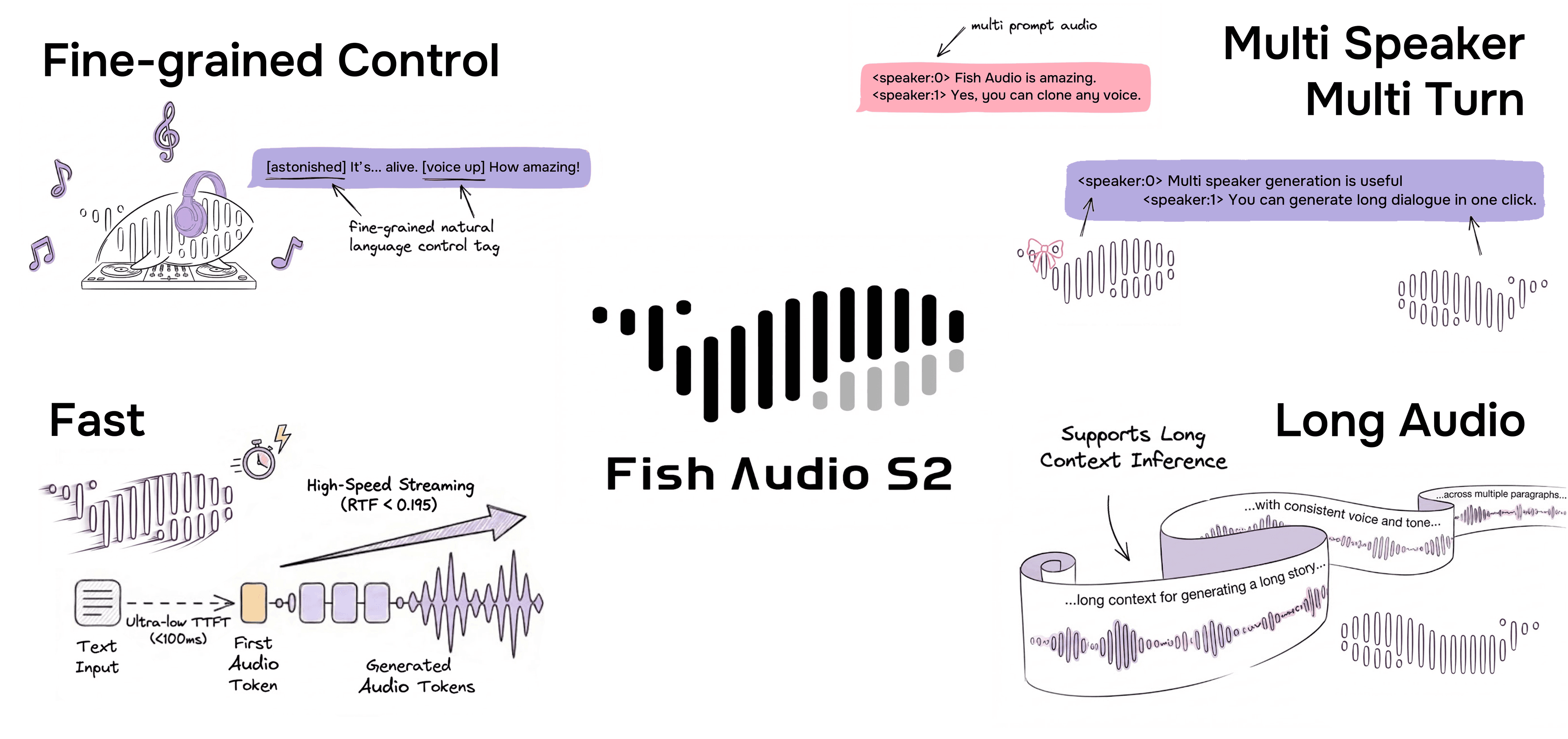
Fish Audio's S2-Pro Brings Expressive TTS to Open Source
The new text-to-speech model can follow natural language instructions to control tone, clone voices from short clips, and speak multiple languages.
More in Text → Speech
All Text → Speech →Nari Labs Ships Qwen3-Based TTS and ASR Models
The startup pairs speech synthesis and recognition built on Qwen3, pitching accuracy, low latency, and lower cost.
StepFun's StepAudio 3 Realtime targets live voice AI
The audio-language foundation model builds a listen-converse-think-act loop aimed at natural, low-latency spoken interaction.
StepFun's StepAudio 3 Gen Unifies TTS and Music
A single discrete autoregressive model handles speech, voice design, sound effects, and music generation.
0 comments
No comments yet. Be the first to weigh in.