Google Releases Gemma 4, a 26B Vision-Language Model
The new open-source model from DeepMind uses a Mixture-of-Experts architecture to handle both text and image inputs efficiently.
Google DeepMind has expanded its open-source offerings with the release of Gemma 4 26B Instruct, a new vision-language model. Published under a permissive Apache 2.0 license, this model is designed to understand and process both text and images, making it a versatile tool for multimodal applications.
An Efficient Multimodal Architecture
The key innovation in Gemma 4 is its Mixture-of-Experts (MoE) architecture. While the model contains a total of 26 billion parameters, it's designed for efficiency by activating only a fraction of them for any given task. The model's designation, "A4B," suggests that approximately 4 billion parameters are active at a time, offering potent performance without the full computational cost of a dense 26B model.
As an instruction-tuned model, Gemma 4 26B is optimized to follow user prompts and commands, making it suitable for a wide range of chat and assistant-style applications. Researchers and developers can access the model and its technical details on its Hugging Face repository.
This release signals Google's continued investment in the open-source AI ecosystem, providing a powerful, state-of-the-art multimodal model to the community. The efficient MoE design makes advanced vision-language capabilities more accessible, enabling new possibilities for applications that can see and reason about the world.
Sources
- Visit
google/gemma-4-26B-A4B-it
Hugging Face
More in Any-to-Any
StepFun's StepAudio 3 Realtime targets live voice AI
The audio-language foundation model builds a listen-converse-think-act loop aimed at natural, low-latency spoken interaction.
SenseTime's SenseNova-U1.5 Unifies Vision Tasks
An 8B model drops the usual encoder and VAE in favor of a single native architecture spanning understanding, reasoning, and image generation.
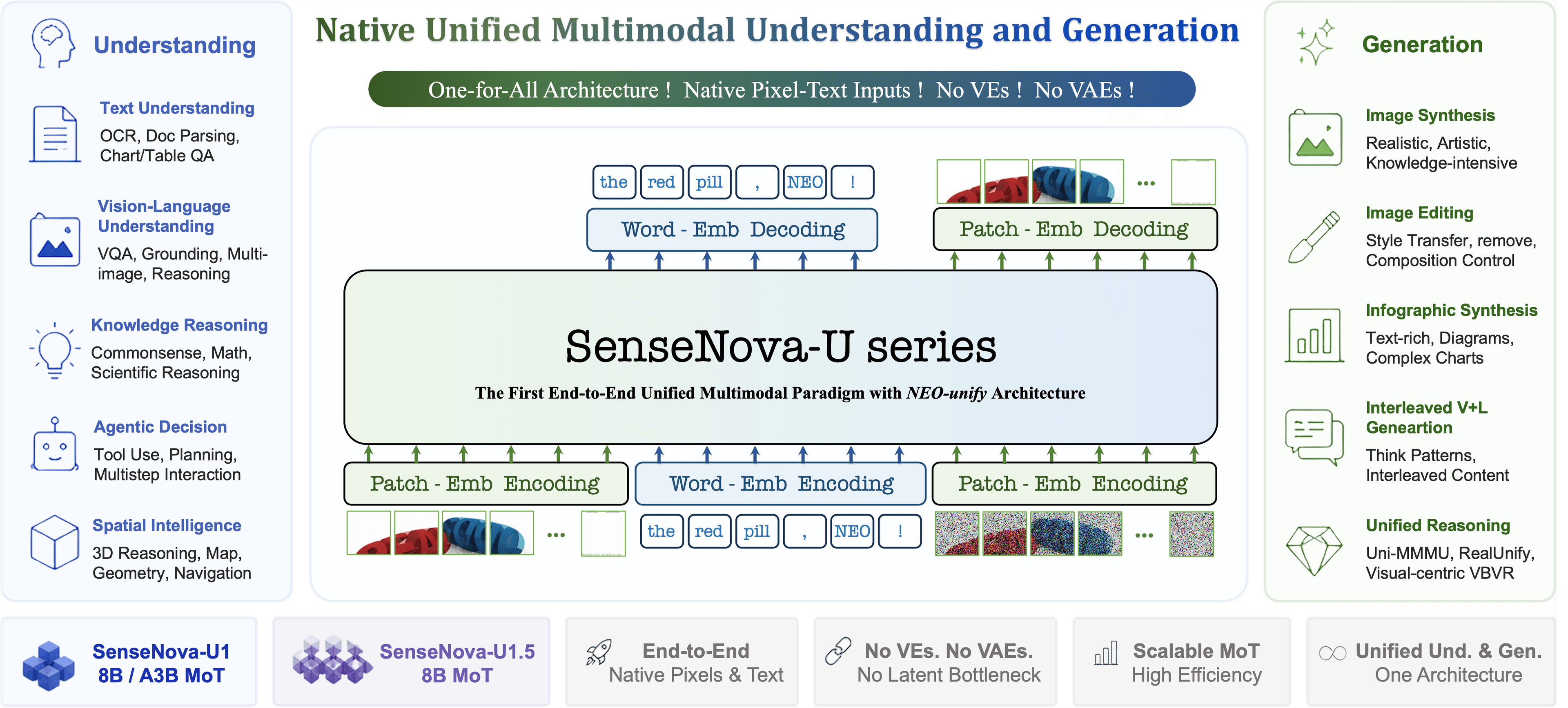
SenseTime Releases SenseNova U1.5 8B Any-to-Any Model
The new 8B multimodal model handles text, images, and image editing within a single native architecture.
0 comments
No comments yet. Be the first to weigh in.