Google Releases Gemma 4 12B Multimodal Model
The new 12-billion-parameter open model from DeepMind introduces a unified 'any-to-any' architecture for advanced multimodal tasks.
Google DeepMind has released Gemma 4 12B, a new generation of its open model family. This 12-billion-parameter model is available under a permissive Apache 2.0 license, continuing Google's commitment to providing powerful tools for the open-source AI community.
Unlike many existing vision-language models, Gemma 4 is built on what Google calls a "unified any-to-any" architecture. This design aims to natively handle a wide variety of data modalities for both input and output, moving beyond the common text-and-image limitations of previous systems.
Why 'Any-to-Any' Matters
This architectural approach is significant for developers. It simplifies the process of building complex applications that need to interpret and generate combinations of different data types, such as text, images, and potentially other formats in the future. Instead of chaining together multiple specialized models, developers can use a single, more integrated system, which could enable more fluid and capable AI assistants, creative tools, and analysis engines.
By releasing a model with this advanced multimodal design, Google provides a powerful new foundation for open-source development. Researchers and engineers can now experiment with and build upon this flexible architecture, pushing the boundaries of what's possible with open AI. The model is available now on Hugging Face.
Sources
- Visit
google/gemma-4-12B
Hugging Face
More in Any-to-Any
StepFun's StepAudio 3 Realtime targets live voice AI
The audio-language foundation model builds a listen-converse-think-act loop aimed at natural, low-latency spoken interaction.
SenseTime's SenseNova-U1.5 Unifies Vision Tasks
An 8B model drops the usual encoder and VAE in favor of a single native architecture spanning understanding, reasoning, and image generation.
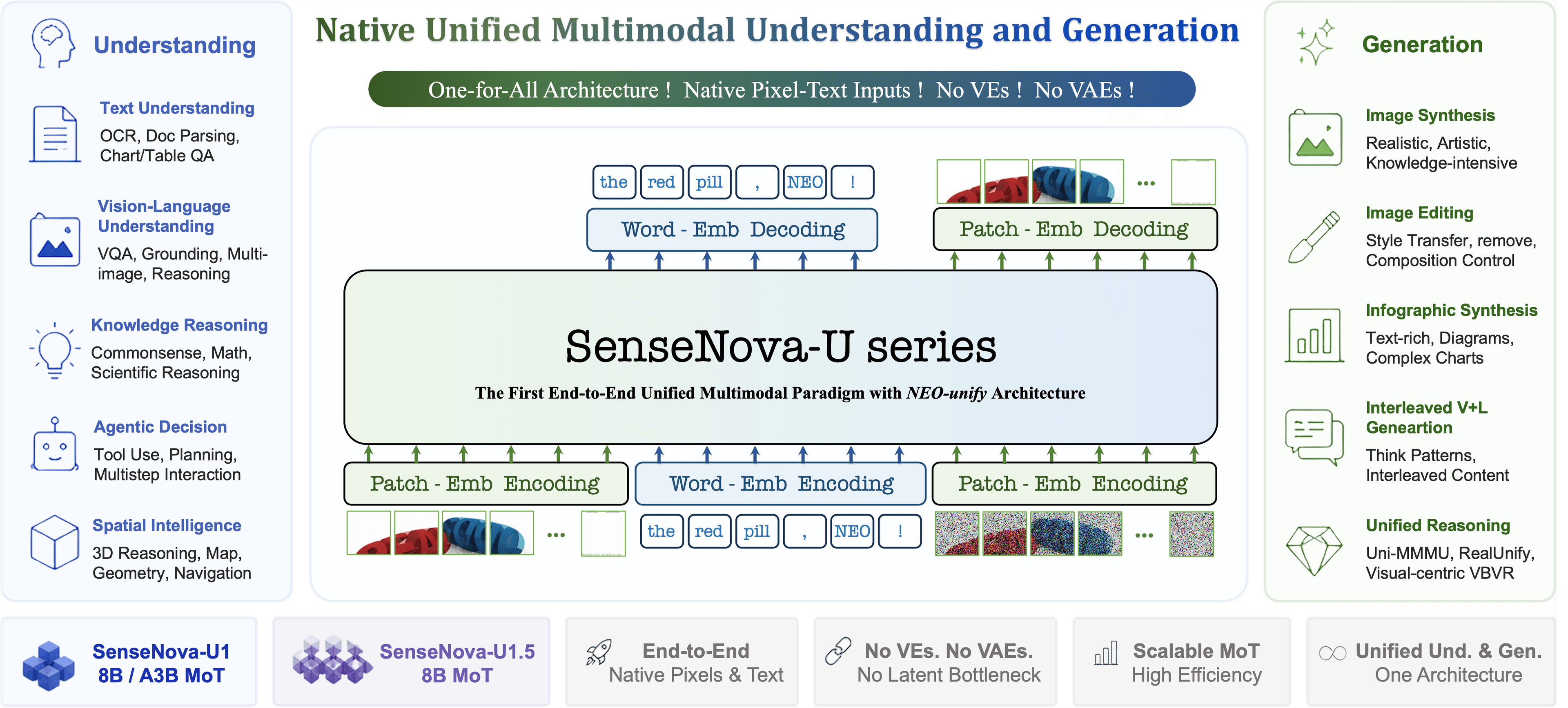
SenseTime Releases SenseNova U1.5 8B Any-to-Any Model
The new 8B multimodal model handles text, images, and image editing within a single native architecture.
0 comments
No comments yet. Be the first to weigh in.