Black Forest Labs brings FLUX to robotics
The image-model maker's FLUX 3 Action Base extends its generative stack into world-action modeling, released through the LeRobot ecosystem.

Black Forest Labs, best known for its FLUX family of image generators, has stepped into robotics with FLUX 3 Action Base, a world-action model published on Hugging Face. The model is distributed through LeRobot, the open robotics stack that has become a common home for policies, datasets, and control models.
The release signals an ambition beyond static image synthesis. A "world-action" model is designed to connect perception with control — taking in multimodal inputs and producing the kind of outputs that can drive a robot's behavior. That places FLUX 3 Action Base in the same broad category as the vision-language-action models that labs and startups have been racing to build.
Why it matters
- It extends the FLUX architecture, previously aimed at generative imagery, into embodied AI.
- Shipping via LeRobot lowers the barrier for researchers already working in that ecosystem to experiment with the model.
- It marks Black Forest Labs' entry into a fast-moving field dominated by robotics-first teams.
Details remain thin at launch: the record lists no published parameter count, context length, or benchmark figures, and the license is marked simply as "other," so would-be users should check the terms on the model card before building on it. As an initial release, it establishes a base that future iterations can build from.
For a company that helped define the current wave of open image models, the move into world-action modeling is a notable bet that the same generative foundations can help machines act, not just render.
Sources
- Visit
black-forest-labs/flux-3-action-base
Hugging Face
More in Any-to-Any
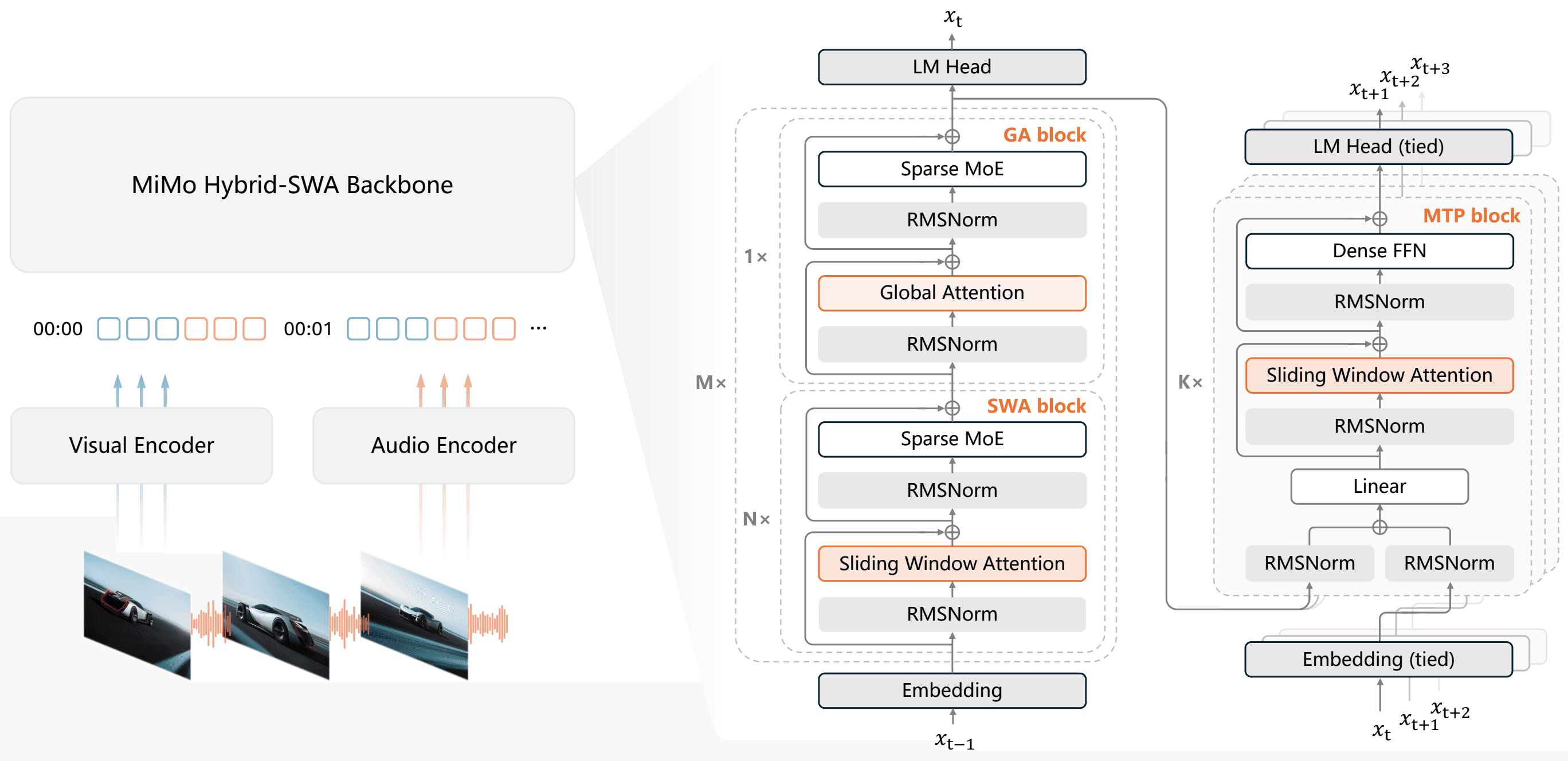
Xiaomi expands MiMo line with V2.6 multimodal models
The new Flash, Pro, and Distill variants add vision, audio, agentic behavior, and long-context handling to Xiaomi's open MiMo family.
StepFun's StepAudio 3 Realtime targets live voice AI
The audio-language foundation model builds a listen-converse-think-act loop aimed at natural, low-latency spoken interaction.
SenseTime's SenseNova-U1.5 Unifies Vision Tasks
An 8B model drops the usual encoder and VAE in favor of a single native architecture spanning understanding, reasoning, and image generation.
0 comments
No comments yet. Be the first to weigh in.