Microsoft's VibeVoice ASR Goes BitNet for CPU Speech
A BitNet-quantized speech recognition model trades GPU dependence for efficient CPU inference in English and Chinese.
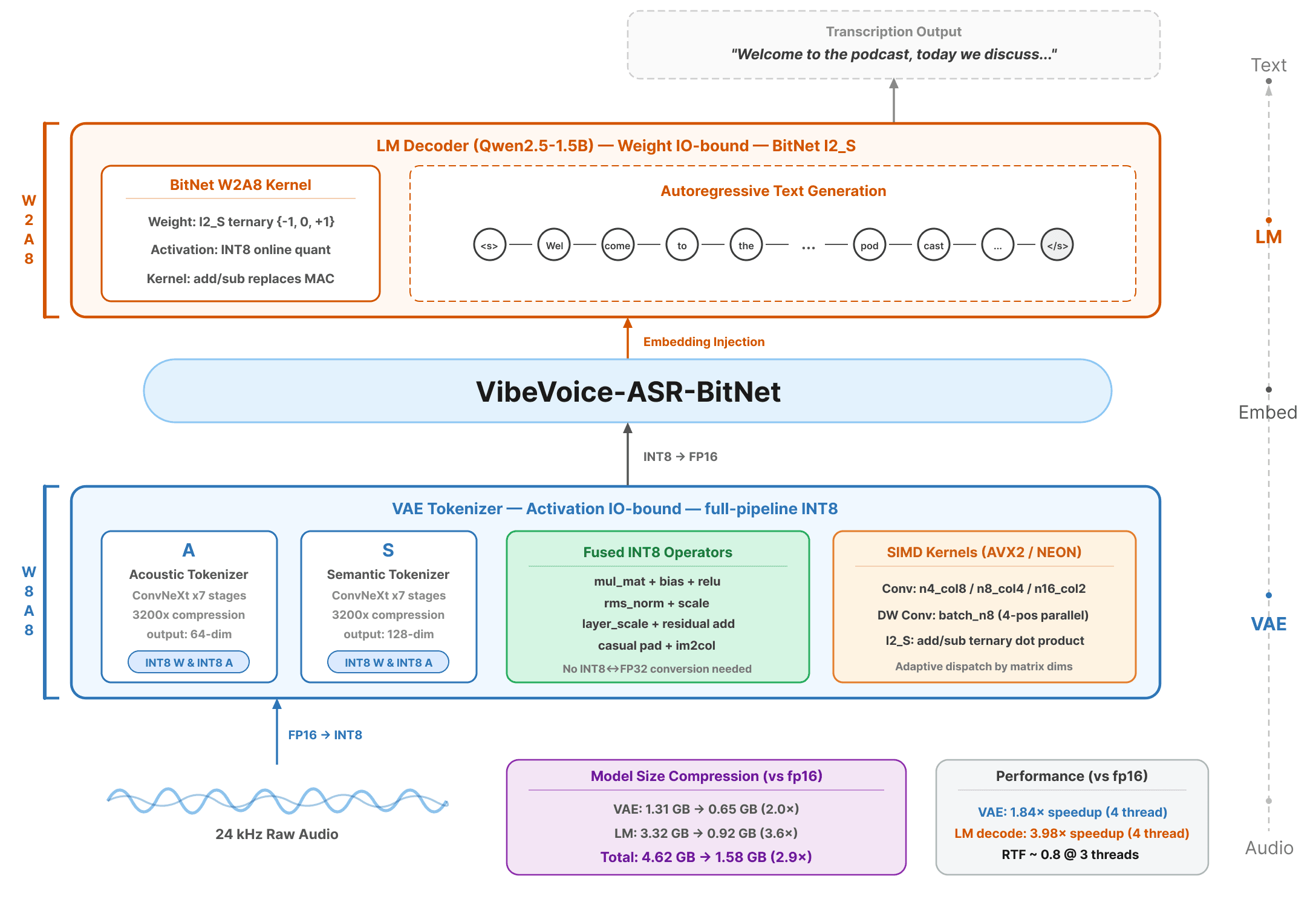
Microsoft has published VibeVoice ASR BitNet, a speech recognition model built to run efficiently on CPUs rather than depending on dedicated accelerators. The release marks the debut of a BitNet-quantized variant in the VibeVoice family, targeting transcription in English and Chinese.
The pitch here is about where the model runs, not just how well. BitNet-style quantization compresses model weights aggressively—the approach is associated with extremely low-bit representations—so that inference becomes practical on commodity processors. For automatic speech recognition, that opens the door to on-device or server-side transcription without the cost and scarcity of GPUs.
Why it matters
Most capable ASR systems still assume a GPU somewhere in the pipeline. A CPU-friendly model changes the deployment calculus for anyone who needs transcription at scale or on constrained hardware.
- Multilingual support for English and Chinese out of the box
- Quantization aimed at reducing memory and compute footprint
- Positioned for CPU inference rather than accelerator-bound serving
The model is released under a custom license, and Microsoft has not published parameter counts or benchmark figures alongside this initial 1.0 release. Teams evaluating it for production will want to validate accuracy against their own audio, but the direction—pushing efficient speech models onto ordinary hardware—is a meaningful one for the open-weights ecosystem.
Sources
- Visit
microsoft/VibeVoice-ASR-BitNet
Hugging Face
More in Speech → Text
StepFun's StepAudio 3 Realtime targets live voice AI
The audio-language foundation model builds a listen-converse-think-act loop aimed at natural, low-latency spoken interaction.
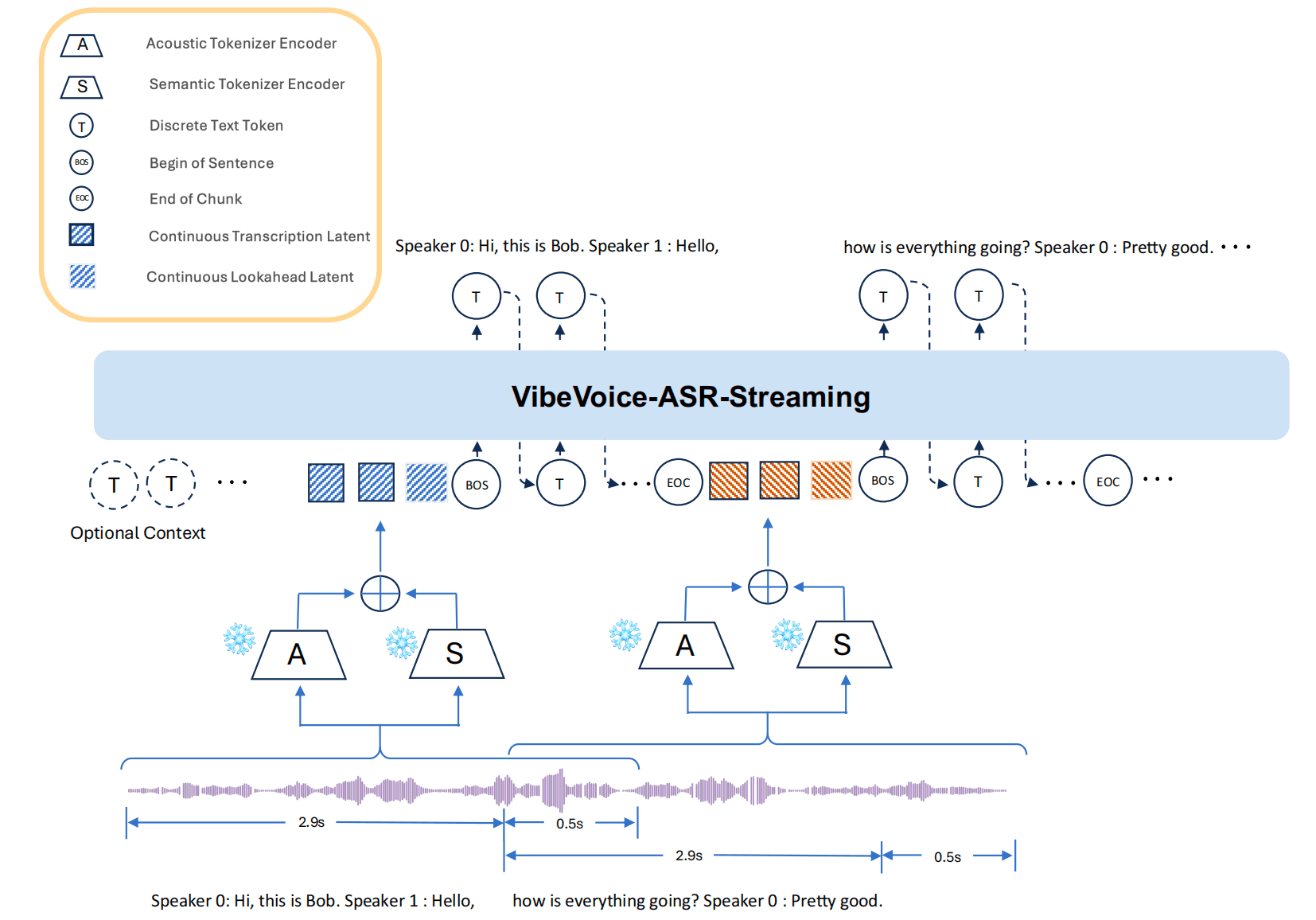
Microsoft's VibeVoice ASR brings streaming speech-to-text
A 7-billion-parameter model targets real-time, multilingual transcription with an open release on Hugging Face.

Superwhisper's s1-mini polishes raw speech-to-text output
A compact Qwen3-based model tackles the unglamorous cleanup work that makes transcripts readable.
0 comments
No comments yet. Be the first to weigh in.