StableAvatar Brings Open Source Talking Heads to Life
A new diffusion-based model from developer FrancisRing animates still images into talking avatars using only an audio track.
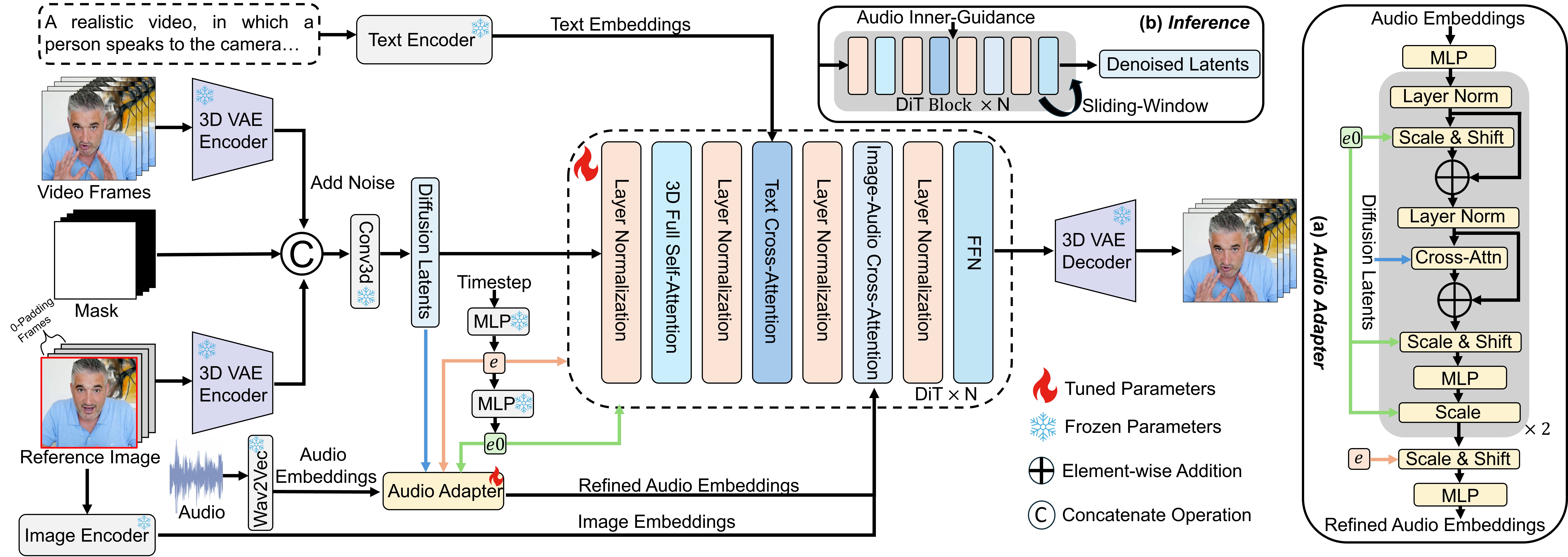
A new open-source model called StableAvatar can generate animated talking-head videos from just a single portrait image and an audio file. Released by developer FrancisRing, the project uses a video diffusion transformer to synthesize realistic lip movements and facial expressions that sync with a provided voice track.
The system operates as a multi-stage pipeline. First, it processes the input audio to predict corresponding facial motion. This motion data is then fed into a 14-billion parameter video diffusion transformer which renders the final animated avatar. This modular approach allows for dedicated components to handle the complex tasks of audio-to-motion mapping and high-fidelity video generation.
Why it matters
The creation of realistic digital avatars is a field often associated with proprietary commercial services. Open-source alternatives are crucial for enabling researchers and independent developers to experiment with and build upon this technology. By using a modern diffusion-based architecture, StableAvatar aims to provide higher-quality, more natural-looking results than many older methods.
The components for StableAvatar are available on the Hugging Face Hub under a permissive MIT license. This open approach encourages broader adoption and further development in the rapidly evolving space of AI-driven video generation.
Sources
- Visit
FrancisRing/StableAvatar
Hugging Face
More in Image → Video

Viggle Releases Viggle-Animate for Character Swaps
The open image-to-video model targets character replacement and video editing, distilled from MiniMax-H3.

Ant Research releases 4DAnyone for 4D human video
The new open model turns a single input into multiview video and reconstructs humans for novel-view synthesis.

MiniMax Releases H3 Video Model on Hugging Face
The company's new diffusion model handles text-to-video and image-to-video, with support for joint audio-video generation.
0 comments
No comments yet. Be the first to weigh in.