GigaAI Releases Giga-World-1 Under Apache 2.0
An open image-to-video world model aims to bridge physically grounded generation and robot policy learning.
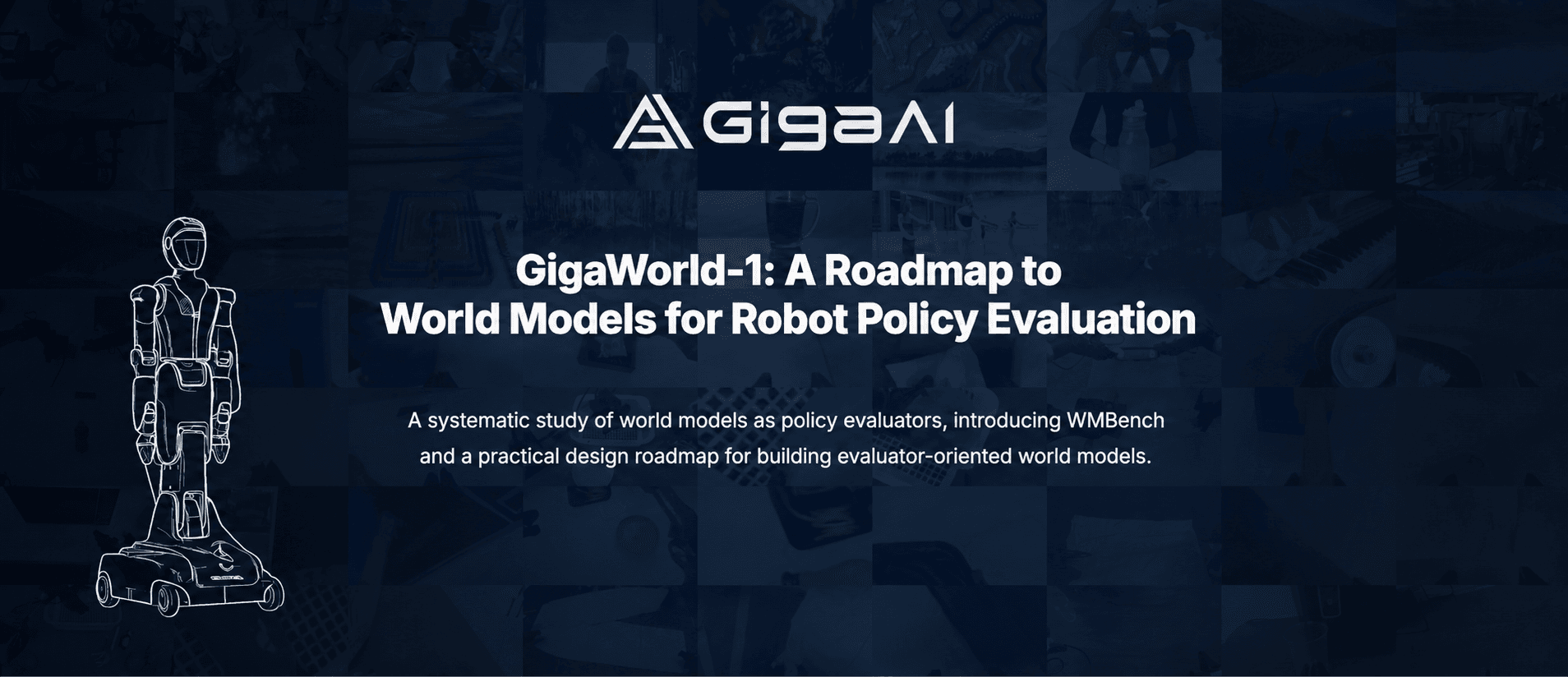
GigaAI has published Giga-World-1, an open image-to-video model positioned as a "world model" rather than a conventional video generator. The release is available on Hugging Face under the permissive Apache 2.0 license, meaning teams can use, modify, and build on it commercially without the restrictions that accompany many recent model drops.
The pitch is physical grounding. Where most image-to-video systems optimize for visually plausible motion, Giga-World-1 is framed around generation that respects the dynamics of the real world — and, crucially, around using that capability for robot policy learning. In practice, a world model that can predict how a scene evolves from an initial frame can serve as a simulator or planning substrate for embodied agents.
Why it matters
World models sit at an interesting intersection of two fast-moving fields:
- Video generation, where image-to-video has become a competitive frontier
- Robotics, where learning policies in the real world is slow, costly, and hard to scale
A model that can generate physically consistent futures could let robots learn from imagined rollouts instead of expensive physical trials, lowering the barrier for smaller labs.
GigaAI has not published detailed specifications such as parameter count or context length alongside the initial release, and independent verification of its physical-grounding claims will take time. Still, an openly licensed world model aimed at both generation and control is a notable addition to the growing open ecosystem, and the accompanying research writeup offers the fuller technical picture.
Sources
- Visit
open-gigaai/Giga-World-1
Hugging Face
More in Image → Video
Viggle Releases Viggle-Animate for Character Swaps
The open image-to-video model targets character replacement and video editing, distilled from MiniMax-H3.

Ant Research releases 4DAnyone for 4D human video
The new open model turns a single input into multiview video and reconstructs humans for novel-view synthesis.

MiniMax Releases H3 Video Model on Hugging Face
The company's new diffusion model handles text-to-video and image-to-video, with support for joint audio-video generation.
0 comments
No comments yet. Be the first to weigh in.