VoxCPM 1.5 Brings Open-Source Voice Cloning
The new 500-million-parameter text-to-speech model from OpenBMB supports both English and Chinese and can replicate a voice from a short audio sample.
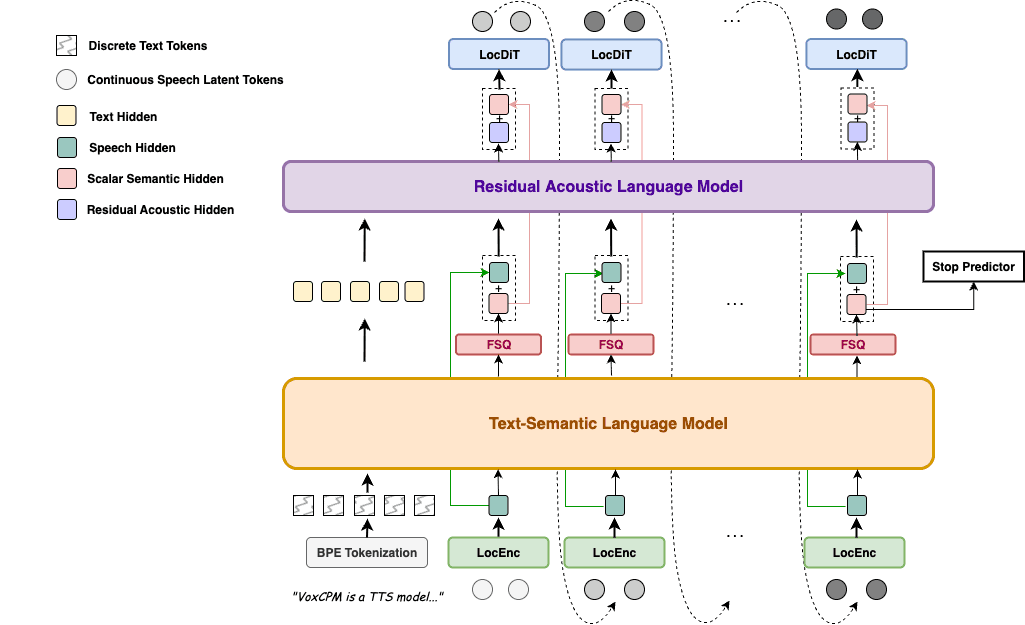
The field of open-source text-to-speech has a new contender with the release of VoxCPM 1.5 by the OpenBMB research group. The model introduces high-quality, zero-shot voice cloning capabilities to the community, enabling users to generate speech in a specific voice using just a short audio sample.
Built on the MiniCPM-4 architecture, VoxCPM 1.5 is a compact 500-million-parameter model. Its relatively small size makes it more accessible for developers and researchers to run and fine-tune on a wider range of hardware, lowering the barrier to entry for creating custom speech applications.
Bilingual Voice Synthesis
A key advantage of the model is its bilingual nature, supporting both English and Chinese within a single framework. This, combined with its permissive Apache 2.0 license, makes it a versatile tool for global applications. Key features include:
- Zero-shot voice cloning from brief audio clips.
- Bilingual support for English and Chinese.
- An efficient 500M parameter architecture.
By providing an open and powerful tool for voice synthesis, OpenBMB is enabling new possibilities in areas like personalized digital assistants, accessible technology, and creative content generation. Developers can explore the model and its capabilities in the official Hugging Face repository.
Sources
- Visit
openbmb/VoxCPM1.5
Hugging Face
More in Text → Speech
StepFun's StepAudio 3 Realtime targets live voice AI
The audio-language foundation model builds a listen-converse-think-act loop aimed at natural, low-latency spoken interaction.
StepFun's StepAudio 3 Gen Unifies TTS and Music
A single discrete autoregressive model handles speech, voice design, sound effects, and music generation.
Breeze-TTS-2 Brings Open Voice Cloning to English
BreezeBlue's second-generation text-to-speech model pairs voice cloning with controllable direction, all under an open release on Hugging Face.
0 comments
No comments yet. Be the first to weigh in.