Qwen Releases 0.6B Model for Audio-Text Alignment
The new open-source tool, based on the Qwen3 architecture, precisely synchronizes audio recordings with their corresponding text transcripts.
Alibaba's Qwen team has released a new specialized tool for audio processing, the Qwen3 ForcedAligner 0.6B. This compact 600-million-parameter model is designed for a specific and crucial task in speech AI: aligning existing text with an audio recording.
Unlike standard speech-to-text models that generate text from scratch, a forced aligner takes both an audio file and its transcript as input. It then determines the precise start and end times for each word in the audio, effectively synchronizing the two. This capability is essential for creating accurately timed subtitles, preparing high-quality datasets for training other speech models, and conducting phonetic research.
The model is built on the Qwen3 architecture and is available on the Hugging Face Hub under a permissive Apache 2.0 license, allowing for broad commercial use. Its relatively small size suggests it can be run efficiently, making this alignment technology more accessible to developers and researchers.
The release of Qwen3 ForcedAligner adds another foundational component to the open-source audio ecosystem, providing a key tool for building more sophisticated applications that handle spoken language.
Sources
- Visit
Qwen/Qwen3-ForcedAligner-0.6B
Hugging Face
More in Speech → Text
StepFun's StepAudio 3 Realtime targets live voice AI
The audio-language foundation model builds a listen-converse-think-act loop aimed at natural, low-latency spoken interaction.
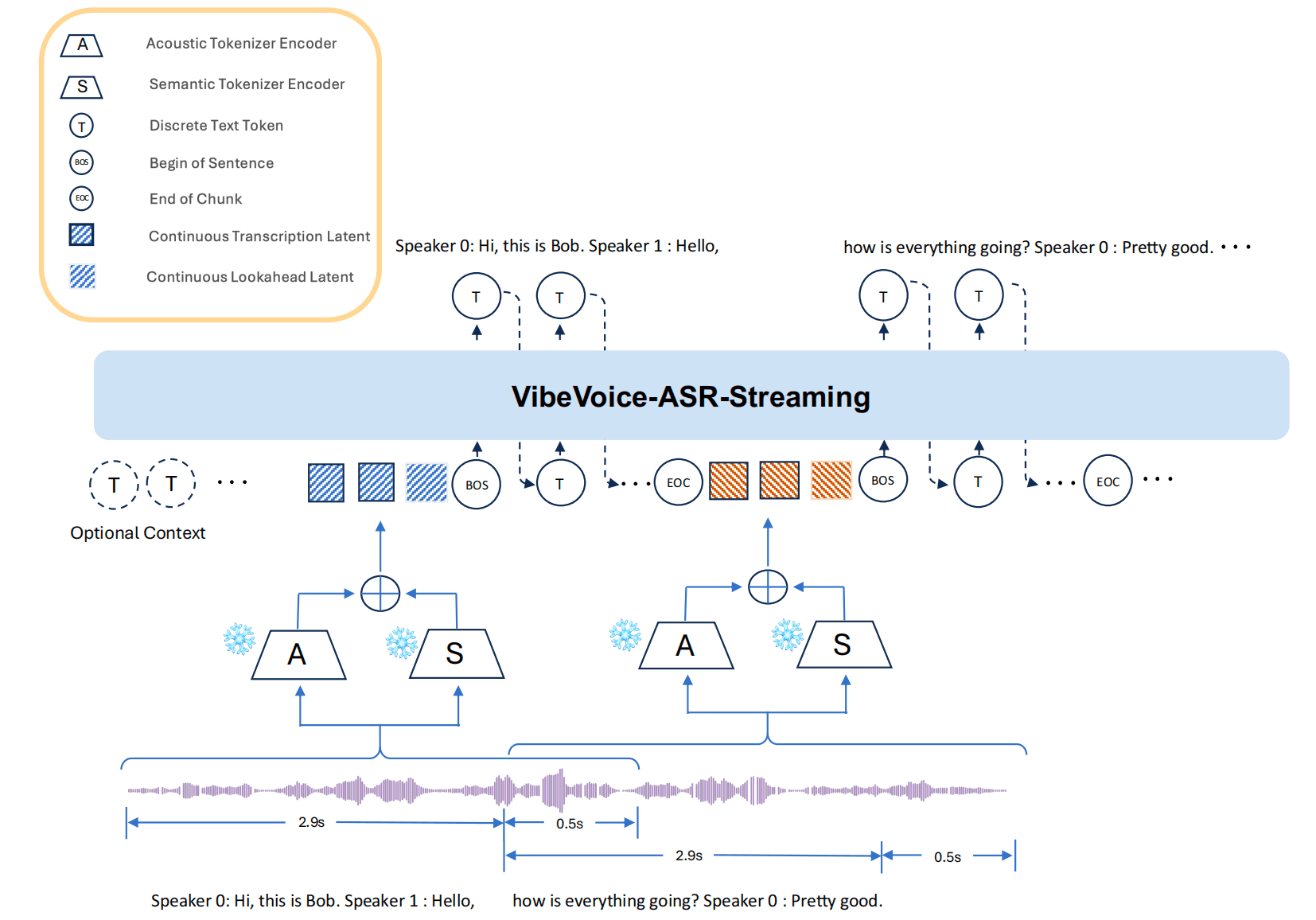
Microsoft's VibeVoice ASR brings streaming speech-to-text
A 7-billion-parameter model targets real-time, multilingual transcription with an open release on Hugging Face.

Superwhisper's s1-mini polishes raw speech-to-text output
A compact Qwen3-based model tackles the unglamorous cleanup work that makes transcripts readable.
0 comments
No comments yet. Be the first to weigh in.