Kroma: An MIT-Licensed Text-to-Image Model for ComfyUI
Lodestones releases an open image generator built on the Krea 2 lineage, aimed squarely at ComfyUI workflows.
Lodestones has published Kroma, an open text-to-image model now available on Hugging Face. The initial 1.0 release arrives under a permissive MIT license, making it one of the more freely usable image generators to surface in recent weeks.
According to the release, Kroma is built on the Krea 2 lineage and packaged with ComfyUI in mind — the node-based interface that has become the default playground for the open image-generation community. That framing suggests the model is meant to slot directly into existing pipelines rather than ship as a standalone application.
Why it matters
Licensing remains one of the biggest friction points for people building on open image models, where restrictive terms often limit commercial use. An MIT license removes much of that ambiguity:
- Free to use, modify, and redistribute, including in commercial projects
- Compatible with the ComfyUI ecosystem many creators already rely on
- A clean starting point for fine-tunes and derivative workflows
The record leaves several technical details unstated — there is no published parameter count or benchmark data yet — so the practical quality of Kroma will be judged by the community as people put it through real ComfyUI graphs. For now, its clear license and familiar tooling make it an easy model to try, with the specifics available on the project's Hugging Face page.
Sources
- Visit
lodestones/Kroma
Hugging Face
More in Text → Image
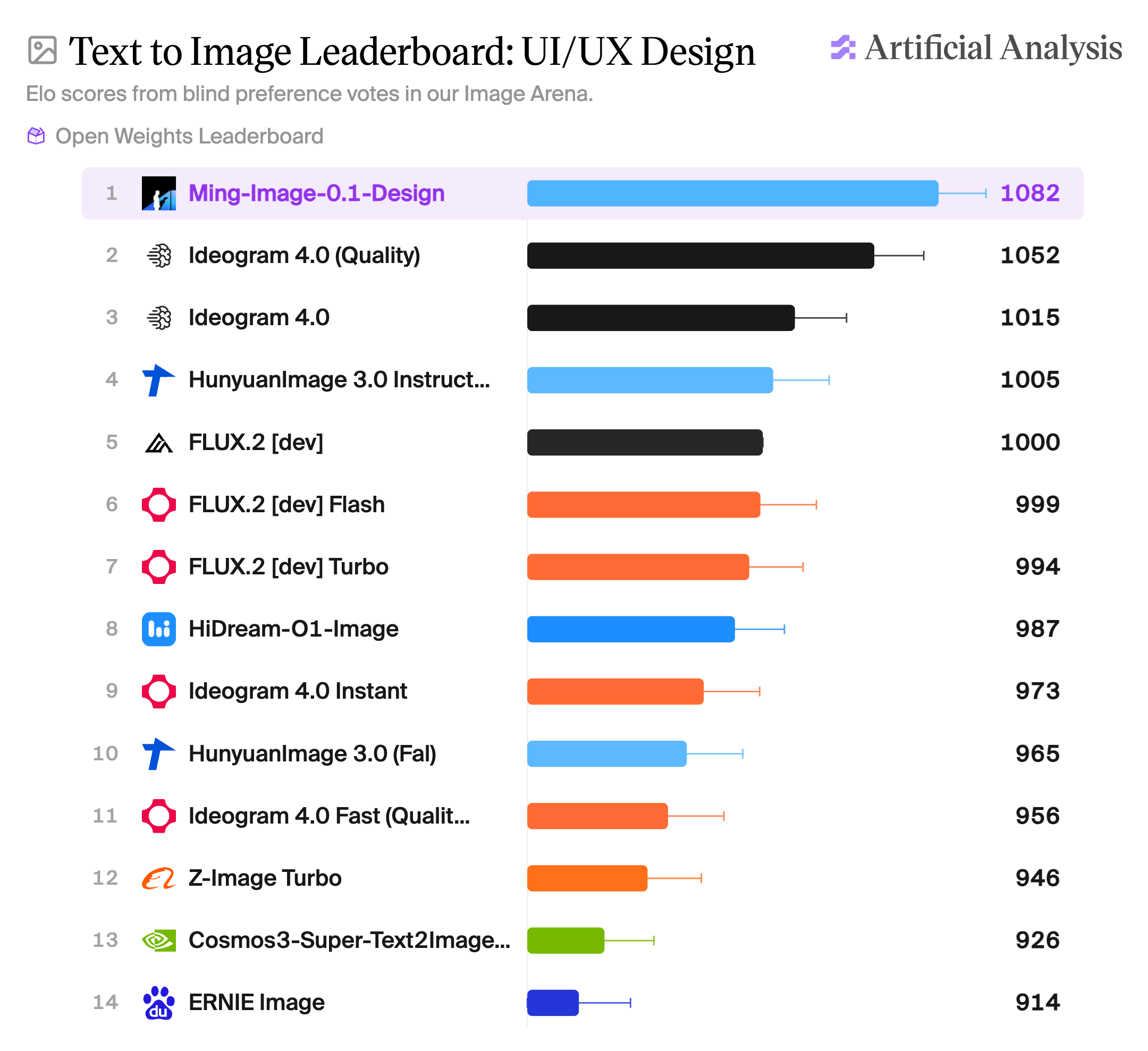
inclusionAI's Ming-Image targets graphic design
A new MIT-licensed text-to-image model leans into legible text rendering and transparent RGBA output for design work.
Qwen-Image-2.1 Adds RGBA to Image Generation
Alibaba's Qwen team updates its open image model with transparency support and joint text-to-image and editing capabilities.
SenseTime's SenseNova-U1.5 Unifies Vision Tasks
An 8B model drops the usual encoder and VAE in favor of a single native architecture spanning understanding, reasoning, and image generation.
0 comments
No comments yet. Be the first to weigh in.