Zhipu AI Releases MIT-Licensed GLM-5.2 MoE Model
The new bilingual model from the Chinese AI firm uses a Mixture of Experts architecture and sparse attention under a fully permissive license.
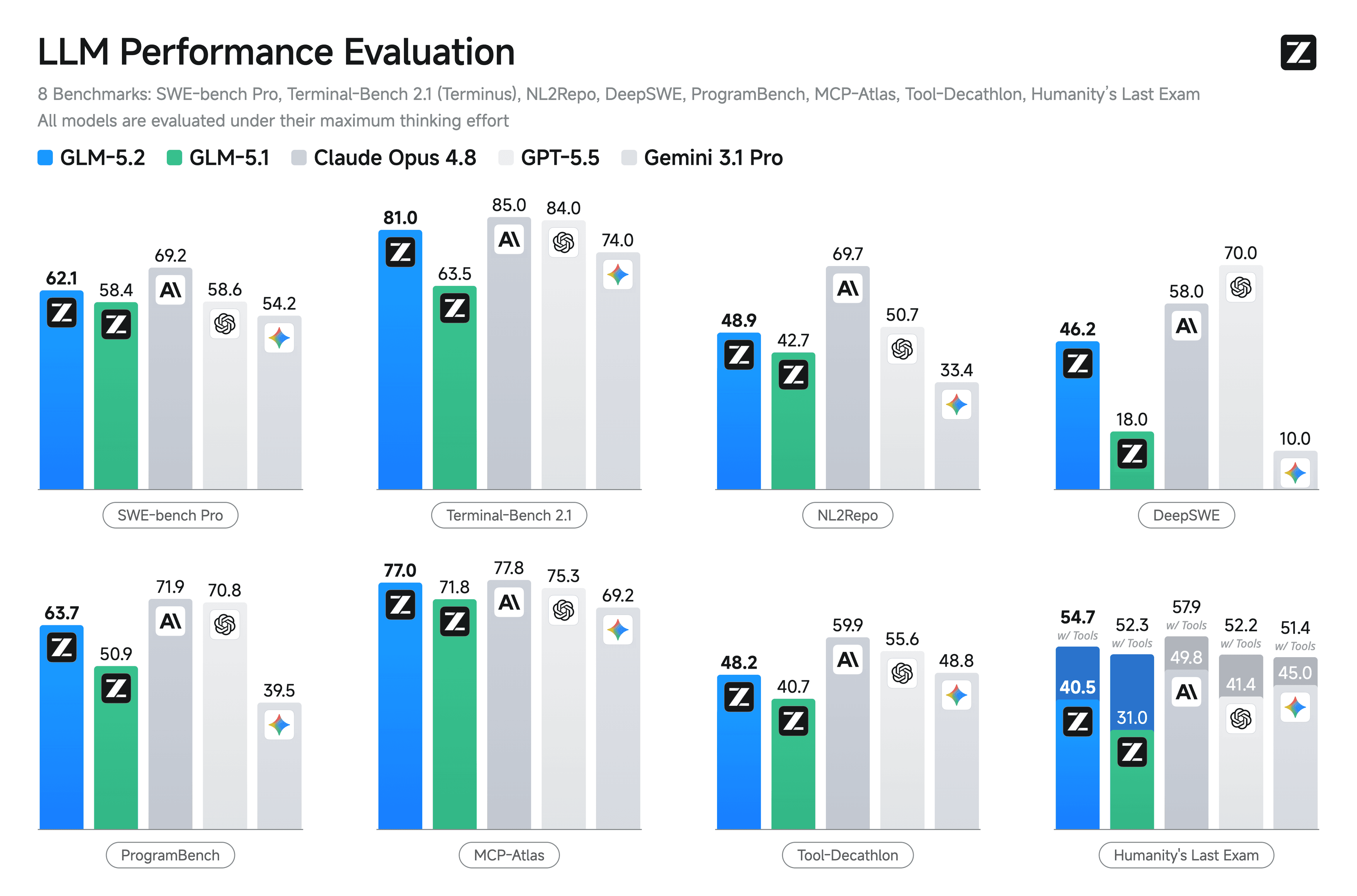
Zhipu AI, one of China’s leading AI labs, has released GLM-5.2, a new open-source bilingual language model. The model continues the company's General Language Model (GLM) series and is designed for proficiency in both Chinese and English.
The key architectural feature of GLM-5.2 is its use of a Mixture of Experts (MoE) design. This approach allows the model to activate only a subset of its parameters for any given input, leading to more efficient computation during inference. The model also incorporates sparse attention, another technique aimed at optimizing performance and resource usage.
Perhaps most notably, Zhipu AI has released GLM-5.2 under the MIT license. This is a fully permissive open-source license that allows for broad commercial use, modification, and distribution without significant restrictions. The choice of license marks a significant contribution to the open-source community, removing barriers to adoption for a wide range of applications.
The model is now available for download and experimentation. Developers and researchers can access the weights and further technical details from the official Hugging Face repository.
Sources
More in Text / LLM
Agnes-3.0-Flash arrives as a multimodal reasoning model
The new release pairs vision-language understanding with a hybrid-attention design aimed at long-context reasoning.

InternLM's Atria Dawn Preview Targets Agentic Tasks
A new mixture-of-experts model trained on verified tool interactions arrives as an early preview under an MIT license.
ZGCM-1 arrives as a fully open 7B reasoning model
A compact foundation model targets math reasoning and agentic search with tool use, and its makers are releasing it fully open.
0 comments
No comments yet. Be the first to weigh in.