DeepSeek-V3.2 Arrives With FP8 Weights, MIT License
The new Mixture-of-Experts model from DeepSeek AI combines an efficient FP8 architecture with a fully permissive license for commercial use.
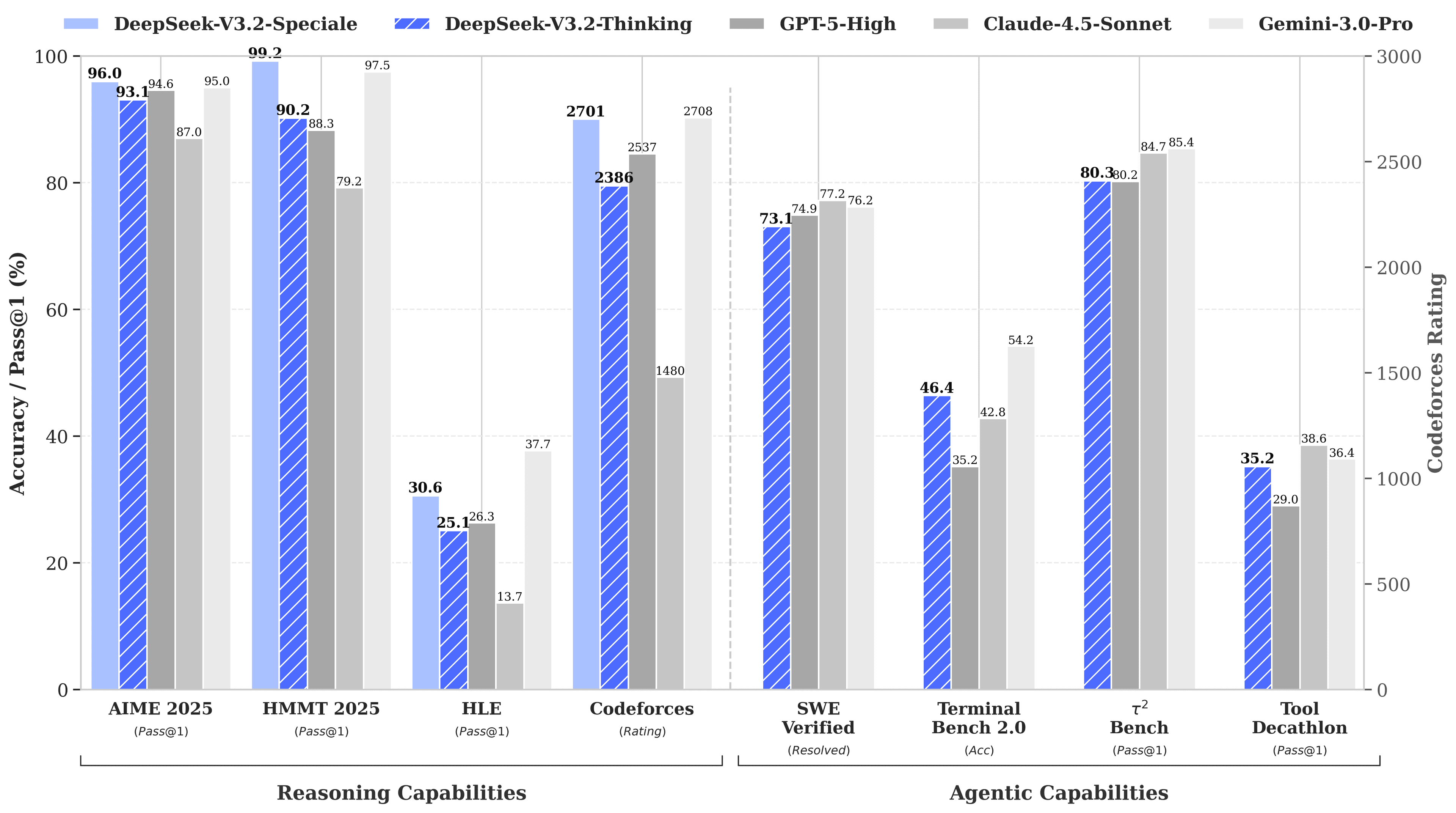
DeepSeek AI has released DeepSeek-V3.2, a new open-source language model that stands out for its technical efficiency and permissive licensing. The model uses a Mixture-of-Experts (MoE) architecture, placing it among a class of powerful yet computationally lean models designed for scalable inference.
The most notable technical feature is its use of FP8 (8-bit floating point) weights. This precision format significantly reduces the model's memory footprint compared to traditional 16-bit models. For developers, this translates to faster inference and the ability to run the model on more accessible, consumer-grade hardware.
The MoE design complements this focus on efficiency. By routing input tokens to specialized "expert" sub-networks, the model can achieve the performance of a much larger dense model while only activating a fraction of its parameters for any given task, further reducing computational costs.
Perhaps most importantly for the open-source community, DeepSeek-V3.2 is available under the MIT License. This choice removes many of the commercial use restrictions seen with other high-performance models, offering developers and businesses a truly open foundation for building new applications.
Sources
- Visit
deepseek-ai/DeepSeek-V3.2
Hugging Face
More in Text / LLM

Agnes-3.0-Flash arrives as a multimodal reasoning model
The new release pairs vision-language understanding with a hybrid-attention design aimed at long-context reasoning.

InternLM's Atria Dawn Preview Targets Agentic Tasks
A new mixture-of-experts model trained on verified tool interactions arrives as an early preview under an MIT license.
ZGCM-1 arrives as a fully open 7B reasoning model
A compact foundation model targets math reasoning and agentic search with tool use, and its makers are releasing it fully open.
0 comments
No comments yet. Be the first to weigh in.