DeepSeek-OCR Tackles Document Parsing with Vision AI
The new vision-language model uses a novel context compression technique to efficiently extract text and structure from complex documents.
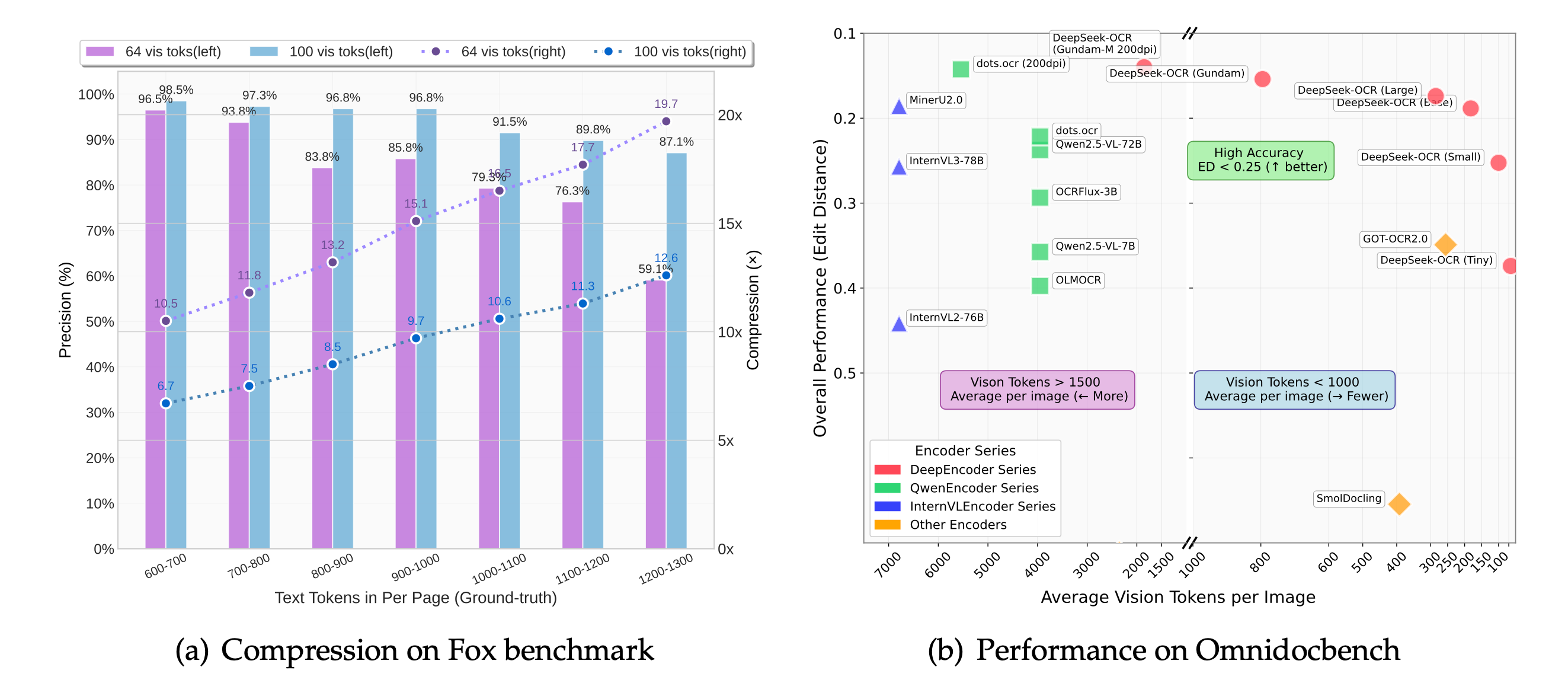
AI company DeepSeek has released DeepSeek-OCR, a new open-source model aimed at improving how machines read and understand documents. Licensed under the permissive MIT license, the model combines computer vision with language processing to go beyond simple text extraction, interpreting the layout and structure of complex pages.
The key innovation behind DeepSeek-OCR is a technique the company calls "optical context compression." Instead of processing a full, high-resolution document image with a large vision encoder, the model first compresses the visual information into a compact, specialized format. This compressed "optical context" is then fed to a language model, making the analysis of multi-page documents significantly more efficient.
This two-stage process allows the model to handle sophisticated document-related tasks. After the compression stage, users can interact with the document's content through a language model interface, enabling operations like:
- Targeted information extraction
- Document-grounded question answering
- Summarization of tables and text
By open-sourcing the model, DeepSeek is providing a powerful tool for developers building applications for data entry automation, archival digitization, and accessibility. The approach represents a move away from traditional OCR systems, which often falter on complex layouts, toward a more holistic understanding of documents. The model and its technical details are available on its Hugging Face repository.
Sources
- Visit
deepseek-ai/DeepSeek-OCR
Hugging Face
More in Vision-Language

Agnes-3.0-Flash arrives as a multimodal reasoning model
The new release pairs vision-language understanding with a hybrid-attention design aimed at long-context reasoning.
SenseTime's SenseNova-U1.5 Unifies Vision Tasks
An 8B model drops the usual encoder and VAE in favor of a single native architecture spanning understanding, reasoning, and image generation.
LLaDA-UI Brings Diffusion Decoding to GUI Agents
inclusionAI's 16.7B MoE vision-language model uses block-wise diffusion to drive graphical interface tasks.
0 comments
No comments yet. Be the first to weigh in.